Jul 24, 2026Manufacturer Guide
How to Evaluate a Battery Uplight Manufacturer Before a Bulk Order
Use this buyer checklist to assess a battery uplight manufacturer, validate samples, review factory testing, and inspect goods before a bulk order.
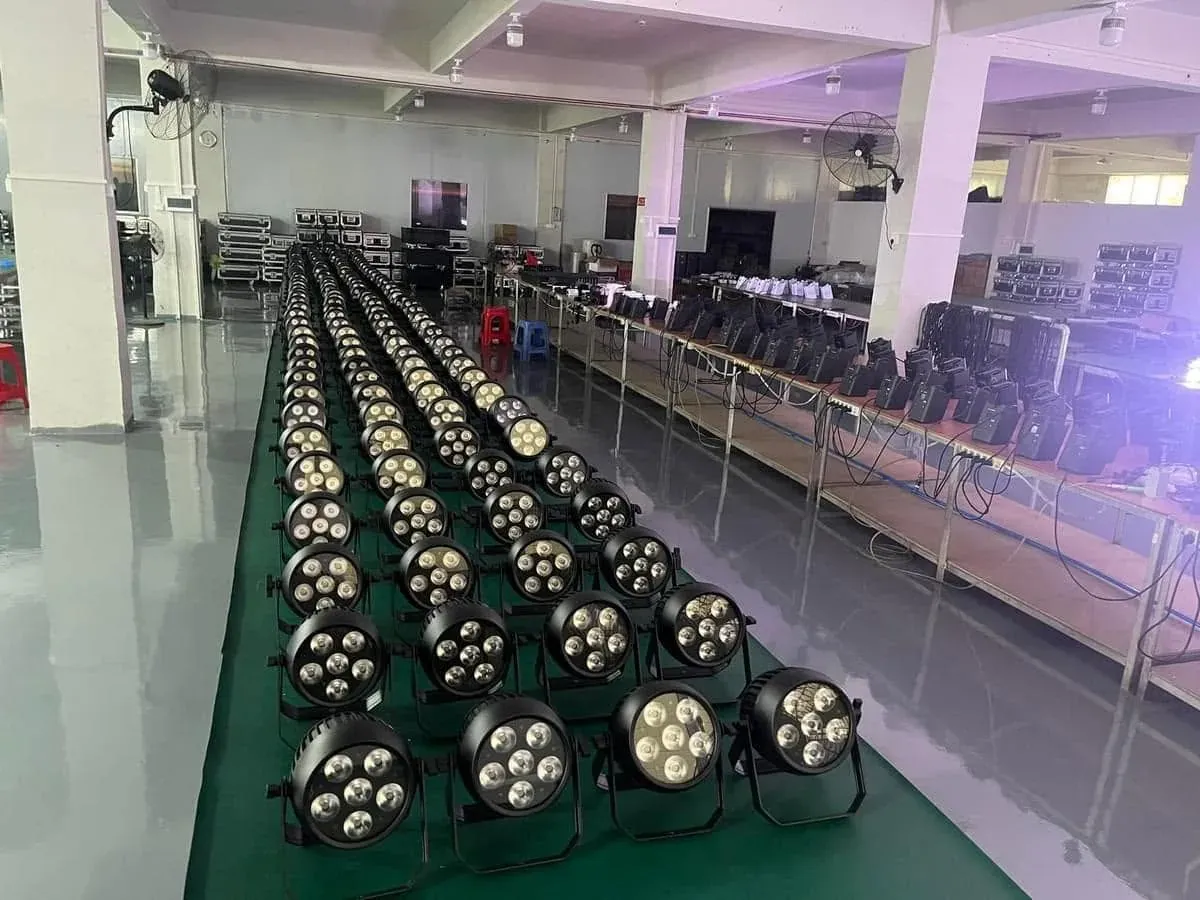
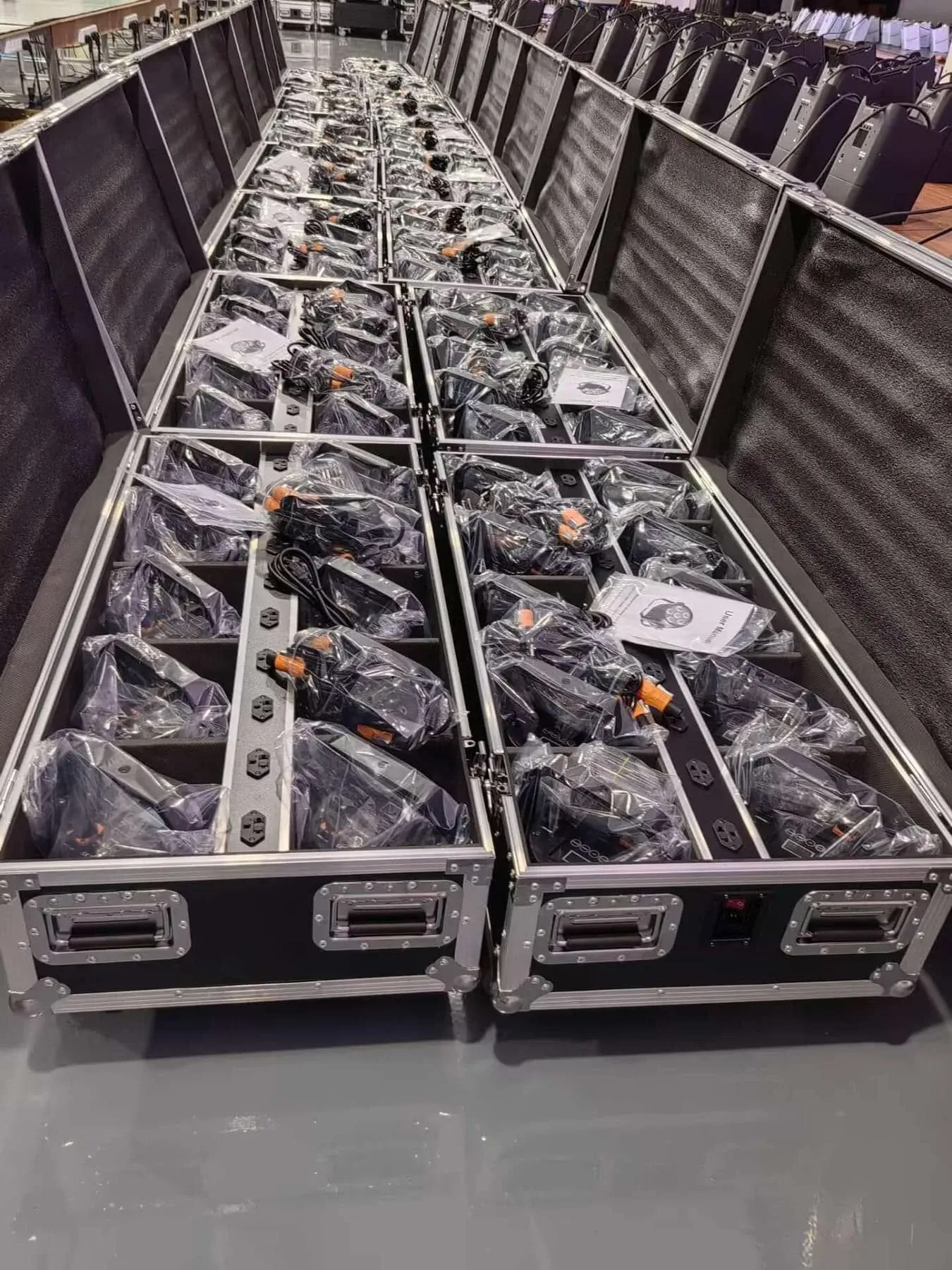
Choosing a battery uplight manufacturer is not only a price comparison. A reliable supplier must be able to turn your application requirements into an approved product configuration, reproduce that configuration across a production batch, document relevant checks, and prepare battery-powered equipment for international shipment.
For distributors, rental companies, and lighting brands, the practical objective is simple: reduce uncertainty before the purchase order becomes large. That means testing a representative sample, agreeing on acceptance criteria, checking production and packing records, and keeping product claims tied to evidence.
Key takeaways
• Start with an application and acceptance brief, not a supplier catalogue.
• Approve the exact LED, battery, control, housing, software, accessories, and packaging configuration.
• Test the sample in the operating modes your customers will actually use.
• Ask how incoming components, assembly, charging, runtime, control, and final packing are checked.
• Define pre-shipment inspection criteria in the purchase order.
• Confirm lithium-battery transport documents with the supplier and freight partner for the selected shipment method.
• Compare the cost of fleet operation and after-sales support, not only the unit price.
What Should You Look for in a Battery Uplight Manufacturer?
A professional battery uplight manufacturer should provide configuration control, reproducible testing, inspection records, and clear commercial communication. A large catalogue alone is not proof that the factory can deliver the same LED bin, battery pack, firmware behavior, wireless-control option, housing finish, and packaging across repeat orders.
The first evaluation should answer five questions:
- Does the supplier understand the intended application?
- Can it define the exact product configuration being quoted?
- Can it show how the sample and production batch will be checked?
- Can it support the documentation and packaging required for your destination market and transport method?
- Can it respond when batteries, chargers, control boards, lenses, or housings need service after delivery?
These questions apply whether you are buying an indoor 6 × 18W battery LED PAR for wedding rental, an IP65 outdoor uplight, or a broader battery-powered stage-lighting product.
Build a Purchase Specification Before Comparing Quotations
Two quotations are not comparable when they refer to different product configurations. Before asking for a final price, write a brief that describes the job the fixture must perform.
Requirement area: Application | Information to define: Indoor ballroom, outdoor event, stage, church, hotel, architecture, or mixed rental | Why it matters: Drives enclosure, output, optics, control, and accessories
Requirement area: Operating window | Information to define: Setup time, expected on-time, brightness, color mix, and turnaround | Why it matters: Makes runtime and charging claims comparable
Requirement area: Optical result | Information to define: Wall height, throw distance, beam shape, color quality, and ambient light | Why it matters: Prevents selection by wattage alone
Requirement area: Control | Information to define: Standalone presets, DMX512, wireless DMX, app, remote, master/slave, or mixed workflow | Why it matters: Defines compatibility and crew training
Requirement area: Environment | Information to define: Indoor only, temporary outdoor exposure, dust, humidity, temperature, and cleaning method | Why it matters: Determines whether an IP-rated platform is appropriate
Requirement area: Fleet size | Information to define: Sample quantity, pilot order, first batch, and repeat-order forecast | Why it matters: Affects packing, charging, spares, and batch control
Requirement area: Market | Information to define: Destination country and sales channel | Why it matters: Determines the documents and labels that must be reviewed
Requirement area: Brand scope | Information to define: Logo, housing color, carton, manual, labels, and accessories | Why it matters: Prevents artwork and packaging changes late in production
The brief should distinguish mandatory requirements from preferences. For example, wireless DMX compatibility may be mandatory for a production company, while a custom carton may be optional for the first pilot order.
At LumiUp, the published product range can serve as a starting reference. Core P3 is a compact 3 × 18W indoor format, Core P6 is a 6 × 18W indoor rental format, and Aqua P12 is a 12 × 18W IP65 outdoor platform. These values identify product families; the battery, optical, control, and accessory configuration still needs to be confirmed in the approved specification for the order.
How Should You Test a Battery Uplight Sample?
Test the sample against a written use case, not against the supplier's longest headline specification. The best sample review reproduces a normal working day: charging, transport, placement, addressing, operation, pack-down, and recharge.
- Record the Sample Identity
Create a sample record with the model, SKU, serial or sample number, firmware version if applicable, battery description, charger, LED configuration, lens, control options, housing finish, and date received. Photograph the fixture, labels, accessories, carton, and internal menu screens.
This record prevents a common problem: approving one version and receiving a quotation or production batch based on another.
- Run Application-Based Output Checks
Place the fixture at the wall distance your crews normally use. Photograph the beam at fixed camera settings and record:
• Wall height and surface color
• Fixture-to-wall distance
• Dimmer level
• Active color channels
• Beam edge and visible color separation
• Output at the top of the intended wash area
• Behavior at low dimmer values
A buyer does not always need a laboratory photometer for the first comparison, but the setup must remain consistent across samples. If illuminance or photometric performance is a contractual requirement, ask for a verified test report and define the measurement geometry.
- Verify Runtime Under Declared Conditions
Runtime depends on active color channels, dimmer level, effects, wireless operation, battery condition, and ambient temperature. Record the start state, test mode, brightness, color values, control status, ambient conditions, and end criterion.
Do not compare “up to” runtime figures unless both suppliers used equivalent conditions. A six-hour result at a demanding mixed color may be more useful to a rental company than a much longer result measured at a low-output single color. The correct target is the event schedule plus an operating reserve agreed by your team.
- Test Charging as a Fleet Workflow
Confirm how the fixture behaves before, during, and after charging. Check the charger or charging case, connector retention, status indication, heat, full-charge behavior, and the time required under the approved charging setup.
For a fleet, ask how many fixtures can charge simultaneously, what electrical input the case requires, whether charging is permitted while fixtures are installed in the case, and how the system should be stored between jobs. These details affect back-to-back event operations more than the capacity label alone.
- Check Every Control Method You Intend to Sell
Verify menu navigation, DMX modes, wireless pairing, addressing, signal-loss behavior, master/slave operation, app compatibility, and recovery after power cycling. Test more than one fixture together. A wireless function that works on a single sample may expose addressing or synchronization issues when twelve or twenty-four units are used in zones.
Document the transmitter, app version, operating system, channel mode, distance, obstacles, and local radio environment. Wireless range is site-dependent, so a single open-field number should not be treated as a guarantee for every ballroom or stage.
- Inspect the Physical Product
Check housing alignment, fasteners, handles, feet, lens seating, display protection, connectors, labels, paint or coating, and accessory fit. For a rental product, repeat the actions crews perform: lift it by the intended handle, adjust the bracket, place it on common flooring, pack it in the proposed case, and connect the charger while wearing normal work gloves.
For an IP-rated sample, request evidence supporting the rating of the exact configuration. Do not treat a visual spray test as certification. Also confirm any operating limitations, especially the condition of port covers and whether charging is allowed in a wet environment.
Mid-article CTA — Request a Sample Evaluation Pack
Comparing battery uplight suppliers? Send LumiUp your application, target quantity, destination market, control requirement, and indoor/outdoor job mix. Ask for the relevant product specification, sample options, and a proposed validation checklist.
What Factory Testing Should a Buyer Ask About?
Factory testing should follow the approved product configuration and produce records that can be linked to the order. The exact process varies by product, but a buyer can ask how the following stages are controlled.
Incoming Component Checks
Critical incoming items may include battery cells or packs, battery-management boards, LED modules, drivers, control boards, wireless modules, chargers, lenses, gaskets, connectors, displays, housings, and packing materials.
The useful question is not “Do you inspect components?” It is “Which characteristics are checked, at what frequency, against which approved reference, and how is a nonconforming lot handled?” For critical components, confirm model identity and supplier traceability where commercially available.
In-Process Assembly Checks
In-process checks can catch wiring, fastener, sealing, soldering, connector, thermal-interface, and software-loading problems before final assembly hides them. Ask whether the production traveler or work instruction identifies the approved configuration and whether operators record key checks.
For an outdoor unit, gasket placement, cable-entry sealing, port-cover fit, and fastening consistency may be part of the controlled assembly process. For an indoor rental product, bracket alignment, connector support, display protection, and charging-port durability may carry more operational importance.
Functional and Aging Checks
A functional test should cover power-up, LED channels, dimming, menu behavior, control inputs, wireless operation if fitted, battery and charging response, and visible abnormal behavior. An aging or burn-in process may help expose early component or assembly failures, but the buyer should ask for the actual test duration, operating mode, sample coverage, and acceptance rule rather than accepting the word “aging” without detail.
Not every unit necessarily receives every long-duration test. The purchase agreement should clarify which checks apply to 100% of units, which are sampled, and which records will be provided.
Final Cosmetic and Packing Inspection
Final inspection should use an approved visual reference. Check product identity, color, labels, accessories, manual revision, carton artwork, quantity, protective materials, and carton condition. If the product is private label, include brand spelling, model number, regulatory markings where applicable, and barcode data in the approval record.
How Should Pre-Shipment Inspection Work?
Pre-shipment inspection is the last opportunity to compare finished goods with the purchase agreement before the balance payment and dispatch. It should be planned before production, not requested for the first time after the goods are packed.
A practical inspection plan covers:
• Purchase order, model, quantity, and carton count
• Approved sample and current specification revision
• Random carton and unit selection
• Product appearance and workmanship
• Power-on and LED-channel checks
• Control and wireless function on selected units
• Battery state and charging response on selected units
• Accessories, chargers, cases, manuals, labels, and spare parts
• Carton dimensions, gross weight, shipping marks, and pallet condition
• Photographic record of selected units, cartons, and container loading where applicable
For larger or higher-risk orders, the buyer may appoint an independent inspection company and define a recognized sampling method and acceptance limits in the contract. Cosmetic, functional, safety-related, and packing defects should not all share the same acceptance rule. A missing accessory and a nonfunctioning battery unit have different consequences.
If the shipment inspection finds a problem, agree on containment, rework, reinspection, and documentation before release. Do not rely on a promise to “fix it next time” when the current batch does not match the approved reference.
Which Battery and Shipping Documents Matter?
Rechargeable lighting equipment may contain lithium-ion batteries, so transport preparation must be reviewed with the supplier and the freight partner. Requirements vary by battery configuration, Watt-hour rating, whether the battery is installed in equipment, transport mode, route, carrier, and current regulations.
Ask for the applicable battery identity and transport documentation for the exact pack used in the approved product. A UN 38.3 test summary is a key document to discuss for lithium cells and batteries. The current packing, marking, state-of-charge, declaration, and carrier requirements should be confirmed by a competent freight forwarder or dangerous-goods specialist for the actual shipment.
The buyer should also verify:
• Battery chemistry and rated energy
• Cell or pack model used in the finished fixture
• Match between product label, packing documents, and test summary
• Charger identity and destination plug
• Protection against accidental activation and short circuit during transport
• Packaging method and any carrier-specific restrictions
This is an area where outdated templates can create delays. Treat each shipment as a current compliance check rather than assuming the previous route or document set remains valid.
Compare Total Fleet Cost, Not Only Unit Price
The lowest quotation can become expensive if the fixtures require repeated troubleshooting, batteries vary between units, chargers are difficult to replace, firmware differs across batches, or spare parts are unavailable.
Compare suppliers across the operating life of the fleet:
Cost area: Setup labor | Questions to ask: How quickly can crews place, address, and synchronize the units?
Cost area: Charging labor | Questions to ask: Can fixtures be charged and checked efficiently between events?
Cost area: Failure isolation | Questions to ask: Can the team identify whether a problem is battery, charger, control, or LED related?
Cost area: Spares | Questions to ask: Which parts and accessories can be ordered, and how are revisions controlled?
Cost area: Repeat orders | Questions to ask: Will the next batch match control behavior, finish, optics, and accessories?
Cost area: Documentation | Questions to ask: Are manuals, labels, specification sheets, and packing records usable in your market?
Cost area: Support | Questions to ask: Who reviews technical questions and how is evidence exchanged?
A modest price difference may be justified when it reduces setup time, inconsistent stock, or after-sales cases. Conversely, a premium price is not automatically evidence of better production. Ask for records.
Common Red Flags When Sourcing Wholesale Battery Uplights
Pause the project if a supplier:
• Cannot identify the exact battery, charger, LED, or control configuration in the quotation
• Changes important specifications between the catalogue, sample, and proforma invoice
• Provides a runtime number without the test mode or brightness condition
• Treats “wireless” as a complete protocol description
• Claims an IP rating but cannot connect it to the exact product configuration
• Refuses reasonable sample testing or pre-shipment inspection
• Uses certificates or reports with a different model and offers no technical explanation
• Cannot explain how private-label artwork and manuals are approved
• Has no clear process for replacements, spares, or recurring quality issues
• Pressures the buyer to place a large order before the sample is approved
One red flag may be a communication problem. Several together indicate configuration and quality-control risk.
What to Include in Your First Manufacturer Enquiry
A detailed first enquiry receives a more useful answer than “Send best price.” Include:
• Company type and country
• Main application and venue types
• Indoor, outdoor, or mixed use
• Preferred fixture format and reference model
• Estimated sample and bulk quantity
• Expected operating window and brightness use
• Required control method and existing controller ecosystem
• Charging-case or flight-case requirement
• Branding, packaging, manual, and label scope
• Target delivery window and transport preference
• Required product and battery documents for review
This information allows the manufacturer to recommend a model and identify items that require confirmation instead of filling gaps with assumptions.
FAQ
Should I order a sample before buying wholesale battery uplights?
Yes. A sample lets you verify output, color, control, charging, physical construction, accessories, documentation, and packing before committing to a production batch. Record the exact sample configuration and make it the approval reference for the order.
How many samples should a distributor test?
One unit can confirm basic product fit, but several units are better for checking wireless pairing, batch appearance, charging workflow, and multi-fixture control. The appropriate sample quantity depends on project risk, customization, and the planned first order.
What is the most important battery uplight runtime question?
Ask how runtime was measured. The answer should identify active colors, dimmer level, effects, wireless status, battery condition, ambient temperature, and the end point of the test. A runtime claim without conditions is not a comparable specification.
Does an IP65 label prove the fixture is suitable for every outdoor event?
No. IP65 addresses specific dust and water-ingress test conditions; it does not mean the fixture can be submerged or used without regard to port covers, charging restrictions, temperature, chemicals, salt exposure, drainage, or installation. Confirm the exact product rating and operating limits.
What should be inspected before shipment?
Inspect model identity, quantity, workmanship, function, battery and charging response, controls, accessories, labels, manuals, packing, carton data, and the match to the approved sample and specification. Define the sampling and acceptance rules before production.
What should I ask about lithium-battery shipping?
Ask for the exact battery identity, rated energy, applicable UN 38.3 test summary, and the documents required for the selected shipment. Confirm current packing, marking, state-of-charge, declaration, and carrier rules with a competent freight partner.
How do I compare two battery uplight quotations?
Normalize the configuration first. Compare LED and optics, battery pack, control, enclosure, IP rating, charger, accessories, packing, documentation, inspection, spare parts, warranty terms, and repeat-order consistency—not only the headline wattage and unit price.
Conclusion
The safest route to a bulk battery uplight order is a controlled sequence: define the application, approve the configuration, test representative samples, agree on production and shipment checks, and verify transport documentation for the exact battery-powered product.
A credible manufacturer should be comfortable replacing broad claims with specific records. That discipline protects both sides. The buyer receives a more predictable rental or distribution product, while the factory receives a clear reference for production, inspection, and future repeat orders.
Final CTA — Send Your Requirements Planning a battery uplight sample or wholesale order? Send LumiUp your target market, venue applications, quantity, control preference, charging-case needs, branding scope, and delivery country. Request a model recommendation, verified specification, sample plan, and quotation.