Jul 24, 2026Buying Guides
IP65 vs Indoor Battery Uplights: Which Type Does Your Rental Fleet Need?
Compare IP65 and indoor battery uplights for rental fleets, outdoor events, weather exposure, maintenance, testing, and total ownership cost.
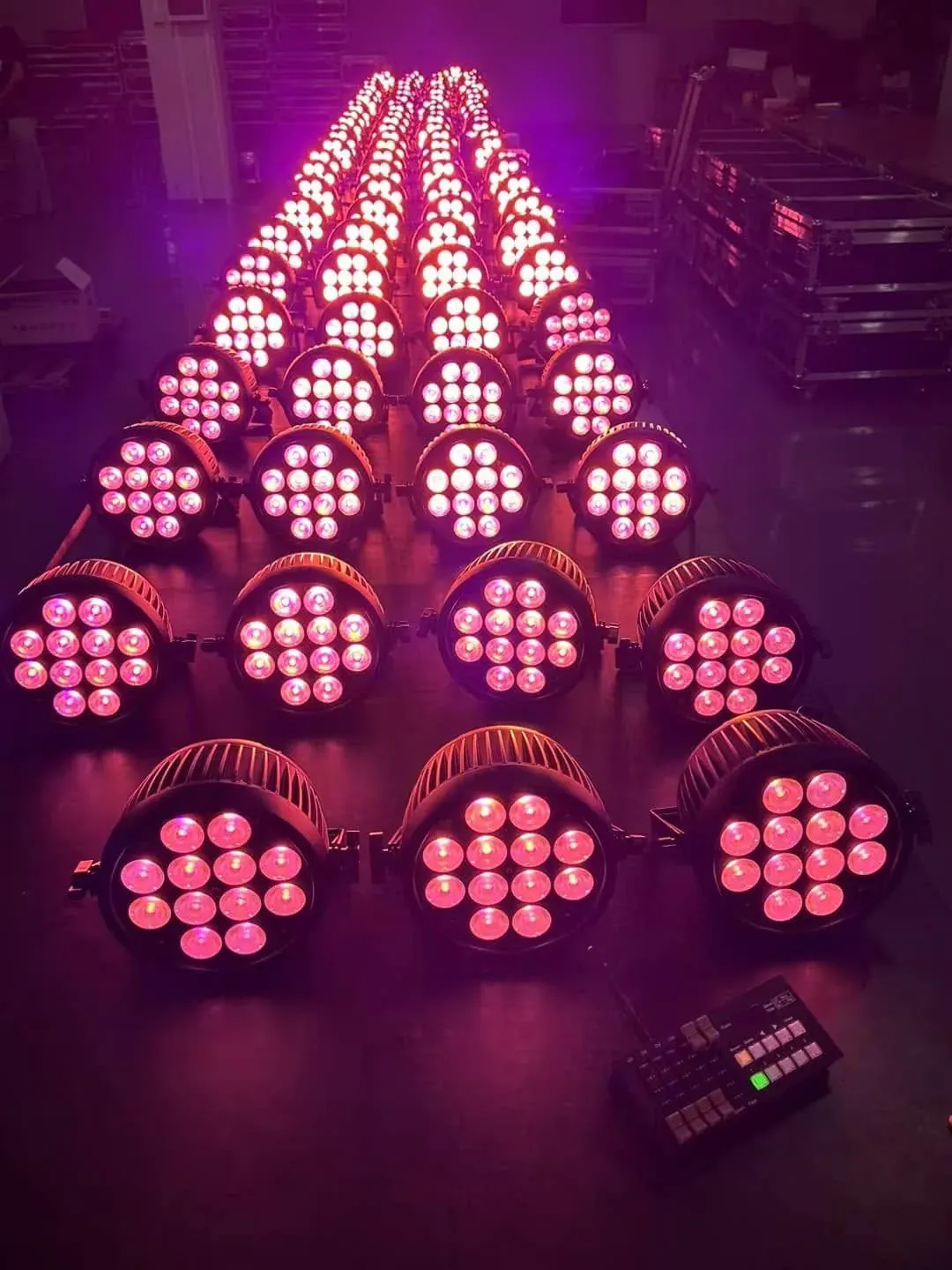
Choose an IP65 battery uplight when the fixture will be exposed to dust or water jets under the conditions covered by its rating. Choose an indoor fixture when it will operate in controlled ballrooms, hotels, churches, studios, and stages where weather exposure is not part of the job.
For many event-lighting rental companies, the right answer is a mixed fleet. Indoor battery uplights can cover high-volume ballroom work, while IP65 units are reserved for tents, patios, gardens, façades, outdoor stages, and temporary architecture. Buying every fixture as an outdoor model may add unnecessary cost and weight; using an indoor model outside may create avoidable failure and safety risk.
Key takeaways
• IP65 describes tested ingress protection; it does not mean “safe in every outdoor condition.”
• Indoor and outdoor fixtures should be selected by actual exposure, not by event name.
• A covered tent can still involve wind-driven rain, condensation, wet ground, and open sides.
• Output, beam shape, battery behavior, control, and maintenance matter alongside IP rating.
• Outdoor charging and open connectors require specific operating instructions.
• A mixed Core and Aqua fleet can align capital cost with the jobs a rental company actually serves.
• Ask for the rating evidence and limitations of the exact production configuration.
What Does IP65 Mean on a Battery Uplight?
In the IP code, the first digit describes protection against access to hazardous parts and solid foreign objects; a “6” is the highest dust-protection digit and is commonly described as dust-tight. The second digit describes water protection; a “5” indicates protection against water jets under defined test conditions.
IP65 is therefore useful for temporary outdoor event work, but the rating has boundaries. It does not mean the fixture is suitable for submersion, pressure washing, saltwater exposure, every chemical cleaner, every temperature, or operation with covers and connectors left open. It also does not automatically apply to a charger, charging case, power connector, external antenna, or optional accessory.
Buyers should ask four follow-up questions:
- Which exact model and configuration was evaluated?
- Which ports, covers, vents, and accessories must be in a particular position?
- What are the operating, charging, cleaning, and storage limitations?
- What evidence is available to support the published rating?
An IP code is a product characteristic, not a substitute for installation planning or crew training.
IP65 vs Indoor Battery Uplights: Quick Comparison
Decision factor: Typical applications | Indoor battery uplight: Ballrooms, hotels, churches, DJ events, indoor stages, studios | IP65 battery uplight: Tents, patios, gardens, façades, outdoor stages, temporary architecture
Decision factor: Environmental priority | Indoor battery uplight: Portability, finish, quiet operation, charging efficiency | IP65 battery uplight: Dust and water ingress protection, sealed construction, outdoor handling
Decision factor: Weather exposure | Indoor battery uplight: Avoid | IP65 battery uplight: Suitable only within the stated rating and operating limits
Decision factor: Construction | Indoor battery uplight: May use open or less-protected connectors and ventilation | IP65 battery uplight: Requires controlled sealing, covers, cable entries, gaskets, and enclosure design
Decision factor: Purchase cost | Indoor battery uplight: Often lower for equivalent product class | IP65 battery uplight: Often higher because of enclosure and validation requirements
Decision factor: Weight and service | Indoor battery uplight: May be lighter or simpler to access | IP65 battery uplight: May be heavier or require more controlled service to preserve sealing
Decision factor: Maintenance focus | Indoor battery uplight: Connectors, batteries, lenses, brackets, finish | IP65 battery uplight: All indoor checks plus seals, covers, gasket surfaces, drainage, corrosion, and enclosure damage
Decision factor: Best fleet role | Indoor battery uplight: Volume indoor inventory | IP65 battery uplight: Outdoor package, premium weather-exposed work, project inventory
This table describes typical buying logic, not a promise that every indoor or IP65 fixture shares the same construction. Compare approved specifications for the exact models.
When Is an IP65 Battery Uplight Worth the Additional Cost?
An IP65 fixture is worth considering when weather or environmental exposure is a predictable part of the revenue the fixture must earn. The business case improves when outdoor packages can be sold repeatedly and the alternative is cancelling placements, running protected cable, or risking indoor equipment in unsuitable conditions.
Choose IP65 for Regular Outdoor Exposure
IP65 is a logical requirement when fixtures are placed:
• Around open-sided tents
• Along garden paths or landscape features
• On patios and terraces
• Against exterior walls and façades
• Near entrance areas exposed to wind-driven rain
• On temporary outdoor stages
• In dusty temporary venues
• In outdoor architectural or hospitality projects
The correct decision still depends on the full project. An IP65 housing does not solve unstable ground, standing water, unsafe public access, extreme temperature, inadequate mounting, or a charging process exposed to moisture.
Choose Indoor Fixtures for Controlled Venues
Indoor fixtures usually offer the best economic fit for:
• Hotel ballrooms
• Banquet rooms
• Churches and houses of worship
• Conference rooms
• Indoor wedding venues
• Mobile DJ packages
• Studios and rehearsal spaces
• Indoor stage edges and scenic accents
If nearly all jobs occur in controlled venues, paying for an outdoor enclosure on every unit may not create enough additional revenue to justify the investment. Capital may be better used for more fixtures, charging cases, spare units, controllers, or a smaller dedicated outdoor pool.
Treat “Under a Tent” as a Site Condition, Not an Indoor Label
A tent is not automatically an indoor environment. Open sides allow wind-driven water and dust. Condensation can form as temperature changes. Wet ground can splash the lower housing. Crew members may move fixtures while surfaces are damp.
Before specifying an indoor uplight for a tent, confirm that the fixture will remain protected during setup, operation, and pack-down—not only while guests are present. If protection depends on perfect weather or improvised covers, an outdoor-rated platform is the more defensible rental choice.
Mid-article CTA — Ask for a Fleet Recommendation
Tell LumiUp what percentage of your jobs are ballrooms, tents, gardens, patios, façades, and outdoor stages. Include your typical quantity, wall height, operating time, control method, and transport setup. Ask for an indoor/outdoor model mix and sample recommendation.
Core P6 vs Aqua P12 as Two Reference Platforms
LumiUp Core P6 and Aqua P12 illustrate two different purchase paths.
Core P6 is a 6 × 18W battery LED PAR positioned for indoor wedding, event, and rental uplighting. It is the type of platform a buyer may consider for repeatable ballroom packages, DJ work, hotel events, and other controlled spaces.
Aqua P12 is a 12 × 18W IP65 battery LED PAR positioned for outdoor events, tents, temporary architecture, and weather-exposed projects. Its outdoor platform and higher emitter count make it a different class of tool rather than simply a weatherproof version of the same indoor fixture.
Do not compare these models only by multiplying LED count by nominal wattage. Ask for the approved optical, runtime, charging, control, dimension, weight, and environmental information for the configuration being considered. LED configuration does not by itself predict wall illuminance, battery duration, beam quality, or usable output.
How Environment Changes the Lighting Requirement
Outdoor work often requires more output reserve than indoor work. A ballroom may have controlled ambient light, pale walls, and predictable fixture placement. An exterior wall may be darker, taller, farther away, textured, or affected by streetlights and daylight.
Evaluate:
• Surface color and reflectance
• Wall or façade height
• Fixture-to-surface distance
• Beam angle and distribution
• Competing ambient light
• Viewing direction
• Desired color saturation
• Required operating window
An outdoor fixture may need to run at a higher dimmer level to achieve the desired effect, which can reduce runtime. This is why an IP rating and a runtime headline are not enough. Test the actual color and output mode against the real event schedule.
For architectural coverage, a linear wall washer such as the Aqua W9 format may provide a more continuous distribution than a compact PAR, depending on the verified optics. Fixture form factor should follow the surface and visual goal.
Battery Performance in Outdoor Conditions
Battery behavior changes with load, temperature, battery age, charging history, and storage. Cold conditions can temporarily reduce available performance, while high temperature can affect electronics, charging, and battery aging. The acceptable operating and charging ranges must come from the approved product documentation.
For outdoor rental planning:
- Store and charge fixtures in the environment recommended by the manufacturer.
- Start the job with a consistent, recorded state of charge.
- Test the intended brightness and color mix, not only a low-load preset.
- Include setup and standby time in the operating window.
- Keep a reserve for delays, speeches, overtime, or cue changes.
- Inspect the fixture before charging if it has been exposed to moisture.
Never assume that an IP65 operating rating makes wet charging acceptable. Charging conditions, connector state, and enclosure instructions must be confirmed separately.
What Should Installation Preparation Include?
Outdoor reliability begins before the fixtures leave the warehouse. A project sheet should record the site plan, environmental forecast, placement zones, control zones, access routes, ground conditions, public interaction, and charging or battery plan.
Perform a Site Survey
For each placement zone, check:
• Is the ground level, firm, and free from standing water?
• Can guests, vehicles, carts, or catering staff strike the fixture?
• Will irrigation, drainage, roof runoff, or cleaning create direct water exposure?
• Are there trip, tip-over, or theft risks?
• Is the surface close enough for the selected optics?
• Will ambient light overpower the intended color?
• Is the wireless-control path obstructed by structures or equipment?
Battery operation removes power cables at the fixture, but it does not remove the need for safe placement.
Define Port and Cover Status
The crew should know which covers must remain closed during operation. If a data, antenna, or power connection changes the environmental protection, record the permitted configuration on the setup checklist. Do not rely on technicians to infer sealing requirements in the rain.
Prepare a Weather Escalation Plan
Define the conditions under which fixtures are moved, shut down, or removed. IP65 reduces certain ingress risks; it is not permission to continue through any storm, flooding, unsafe wind, lightning, or site evacuation condition.
How Should You Verify an IP65 Product Before Purchase?
Ask for evidence tied to the exact model and construction being ordered. A report for a similar housing, a different connector layout, or a previous model may not support the current claim without a technical assessment.
The review should connect:
• Model and product photographs
• Enclosure and connector configuration
• Test-report identity and issuing laboratory where applicable
• IP code and referenced test method
• Date and revision
• Any limitations or special assembly conditions
During sample review, inspect gasket seating, cover retention, sealing surfaces, fasteners, cable entries, lens fit, and visible enclosure damage. These checks do not replace standardized testing; they help confirm that the production sample matches the reviewed configuration.
For a production order, add sealing-related characteristics to the inspection plan. If the design depends on controlled fastener torque, gasket compression, adhesive, or a leak test, ask how those items are managed during assembly.
Outdoor Shipment Inspection and Rental Maintenance
An outdoor product can lose practical protection if a cover is missing, a gasket is pinched, a lens is cracked, a fastener is loose, or a housing is damaged. Shipment inspection and rental maintenance should therefore include more than a power-on check.
Before Shipment
Check selected units for:
• Correct outdoor model and labels
• Housing, lens, display, and connector-cover condition
• Gasket and port-cover fit
• Fasteners and brackets
• LED channels and dimming
• Battery and charging response
• Control and wireless operation
• Accessories, spares, manuals, and packing
• Match to the approved sample and specification
If a production leak or ingress test is part of the agreed quality plan, define its method, sample coverage, record, and failure response before the order.
Before Every Rental
Inspect the housing, lens, covers, seals, connector areas, feet, brackets, charger, battery status, and control operation. Clean only with the approved method. Dirt trapped on sealing surfaces can compromise closure, while aggressive chemicals can damage coatings, plastics, labels, or elastomers.
After an Outdoor Job
Quarantine any unit with damage or suspected ingress. Allow equipment to dry and reach the specified charging condition before connecting it to power. Record recurring failures by model, batch, location, and symptom; patterns help distinguish handling damage from a product or process problem.
How to Build a Cost-Effective Mixed Fleet
Start with the last twelve months of jobs or a realistic sales forecast. Classify each placement—not only each event—as controlled indoor, protected temporary, or weather-exposed outdoor.
Suppose a rental company typically runs twenty indoor ballroom fixtures and only eight exterior or tent fixtures on the same weekend. A mixed purchase can provide enough indoor volume while preserving a smaller IP65 pool for exposed zones. Add spare coverage according to the company's service risk and distance from the warehouse.
Consider:
• Concurrent indoor demand
• Concurrent outdoor demand
• Percentage of events with mixed zones
• Revenue difference for outdoor packages
• Weight and case capacity
• Charging infrastructure
• Spare ratio
• Seasonal peaks
• Turnaround between events
• Compatibility of control workflows
Standardizing every unit on one platform can simplify training and accessories, but it may increase capital cost. A mixed fleet can be more efficient if menus, control protocols, labels, and case organization remain clear.
A Practical Selection Matrix
Job condition: Indoor hotel ballroom | Recommended starting point: Indoor battery PAR | Additional confirmation: Output, quiet operation, runtime, charging, finish
Job condition: Indoor church or stage | Recommended starting point: Indoor battery PAR or panel | Additional confirmation: Control integration, beam, mounting, runtime
Job condition: Fully open patio | Recommended starting point: IP65 platform | Additional confirmation: Weather plan, placement, output, operating limits
Job condition: Open-sided wedding tent | Recommended starting point: IP65 platform for exposed zones | Additional confirmation: Wind-driven rain, condensation, ground, charging plan
Job condition: Exterior façade | Recommended starting point: IP65 PAR or wall washer | Additional confirmation: Throw, optics, ambient light, mounting, control
Job condition: Covered entrance with possible splash | Recommended starting point: IP65 platform preferred | Additional confirmation: Actual exposure and connector orientation
Job condition: Indoor room with occasional cleaning splash | Recommended starting point: Assess exact cleaning exposure | Additional confirmation: IP evidence, chemical compatibility, operating procedure
Job condition: Mixed indoor/outdoor event | Recommended starting point: Mixed fleet | Additional confirmation: Control compatibility, labeling, spares, case plan
The matrix is a starting point. The final selection should be confirmed from the approved product specification and a site-relevant sample test.
FAQ
Is IP65 fully waterproof?
No. IP65 indicates dust-tight construction and protection against water jets under defined test conditions. It does not indicate submersion protection, and it does not remove product-specific limits concerning covers, connectors, charging, temperature, chemicals, or installation.
Can an indoor battery uplight be used under a wedding tent?
Only if the fixture remains within its specified indoor environment throughout setup, operation, and removal. Open-sided tents can expose equipment to wind-driven rain, condensation, splash, and wet ground. An IP-rated fixture is the safer starting point for exposed zones.
Does every rental company need IP65 uplights?
No. Companies serving only controlled indoor venues may gain more value from indoor fixtures and charging infrastructure. IP65 inventory is most useful when outdoor or weather-exposed work is a repeatable part of the business.
Is IP65 enough for heavy rain?
Do not translate IP65 into a general promise for “heavy rain.” The rating covers specified water-jet tests, while actual events introduce duration, direction, pressure, pooling, damaged seals, open ports, wind, and installation factors. Follow the exact product instructions and the event safety plan.
Can I charge an IP65 battery uplight outdoors?
Do not assume so. The operating IP rating may require covers to be closed and may not apply during charging. Use only the charging environment and connector condition stated in the approved instructions.
Are outdoor battery uplights always brighter?
No. Environmental protection and optical output are separate characteristics. Compare verified illuminance, beam angle, distribution, color system, dimming, and runtime under relevant conditions.
How should I inspect an outdoor uplight after a rental?
Check the enclosure, lens, fasteners, connector covers, gaskets, brackets, feet, labels, charger, battery response, and control operation. Quarantine damaged or potentially wet equipment until it can be assessed under the manufacturer's procedure.
Conclusion
The choice between an IP65 and indoor battery uplight should follow the exposure of the fixture, the visual requirement, and the economics of the rental fleet. Indoor platforms are efficient tools for controlled venues. IP65 platforms are appropriate where dust and water exposure are part of the planned job, provided crews respect the rating's limits.
For many rental businesses, a mixed inventory offers the best balance: indoor units for volume ballroom work and outdoor units for tents, patios, gardens, façades, and temporary stages. Approve each model on its own specifications, test it in a representative application, and build the environment into inspection and training.
Final CTA — Send Your Indoor and Outdoor Requirements Need to choose between Core and Aqua battery lighting? Send LumiUp your venue types, expected quantity, wall height, outdoor exposure, runtime target, control system, charging preference, and destination country. Ask for verified model specifications, sample options, and a project quotation.