
Quick Answer
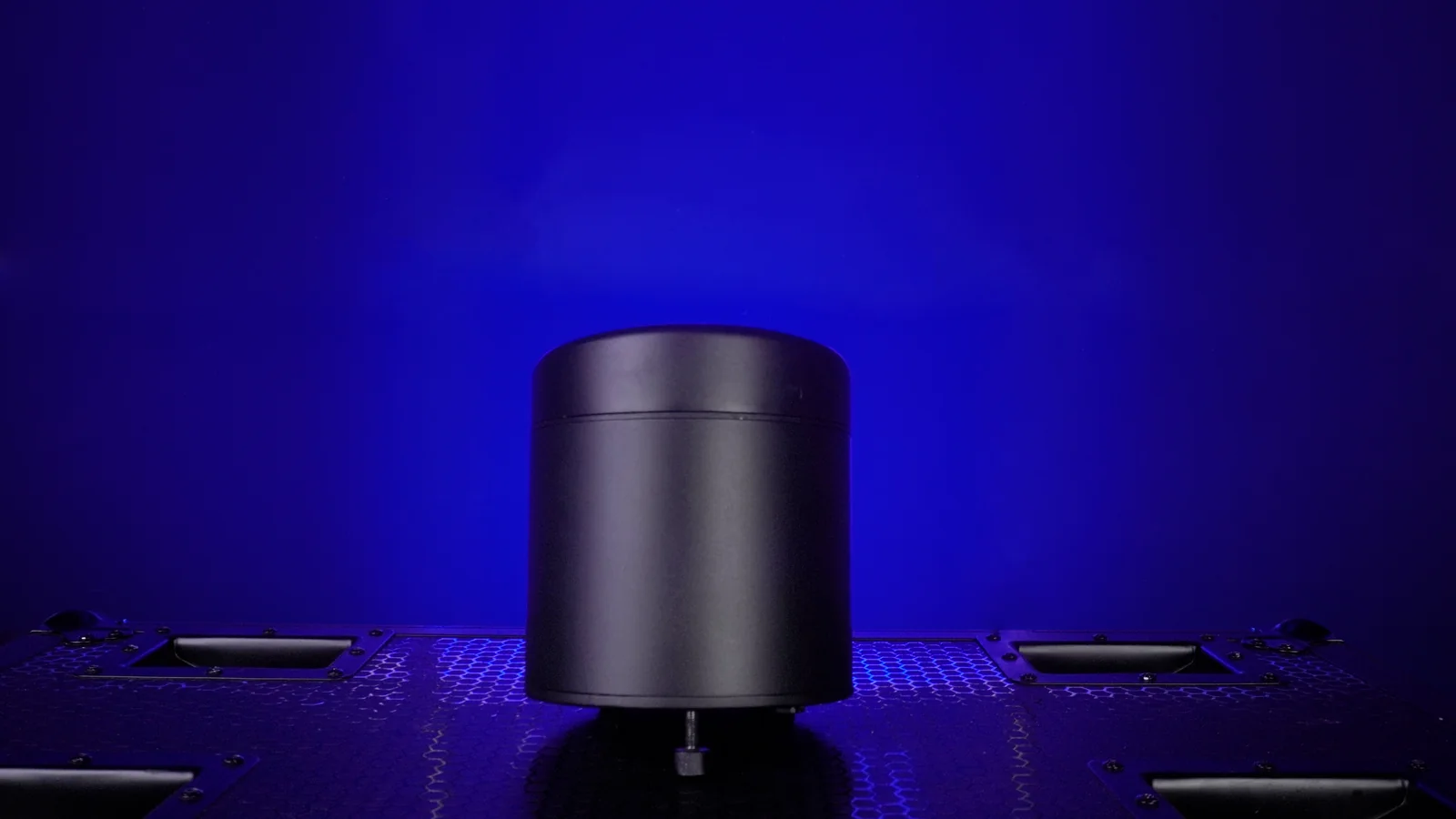
Battery powered uplights for events can stand on a level floor, project light from an adjustable angle, or hang from an approved mounting point when the fixture supports those positions. Multiple mounting options give event teams more freedom to reach walls, columns, and overhead details while keeping visible lighting equipment compact and visually unobtrusive.
In This Guide
Why Mounting Flexibility Matters in Event Uplighting
Mounting flexibility matters because the target is rarely in the same position from one venue to the next. A ballroom may have low wall panels, a hotel entrance may have tall columns, and a temporary stage may leave no safe floor space near the scenic element that needs light.
A fixed operating angle can put the brightest part of a beam below the intended feature or create a concentrated patch near the floor. Moving the fixture farther away may help, but furniture, guest routes, drape, or the venue boundary can make that impossible. An adjustable position responds to the real wall height and throw distance.
Appearance matters as well. Wedding uplighting and hotel lighting often place fixtures where guests and cameras can see them. Large exposed side brackets can interrupt a refined room, while a compact fixture with integrated battery uplight mounting options is easier to place discreetly and reuse across different layouts.
Three Ways to Position Battery Powered Uplights
The most useful positioning choices are floor-standing, angled, and suspended. Each solves a different venue constraint, and each still requires a stable or approved mounting location, a clear beam path, and access for setup and removal.
Floor-Standing for Fast, Clean Placement
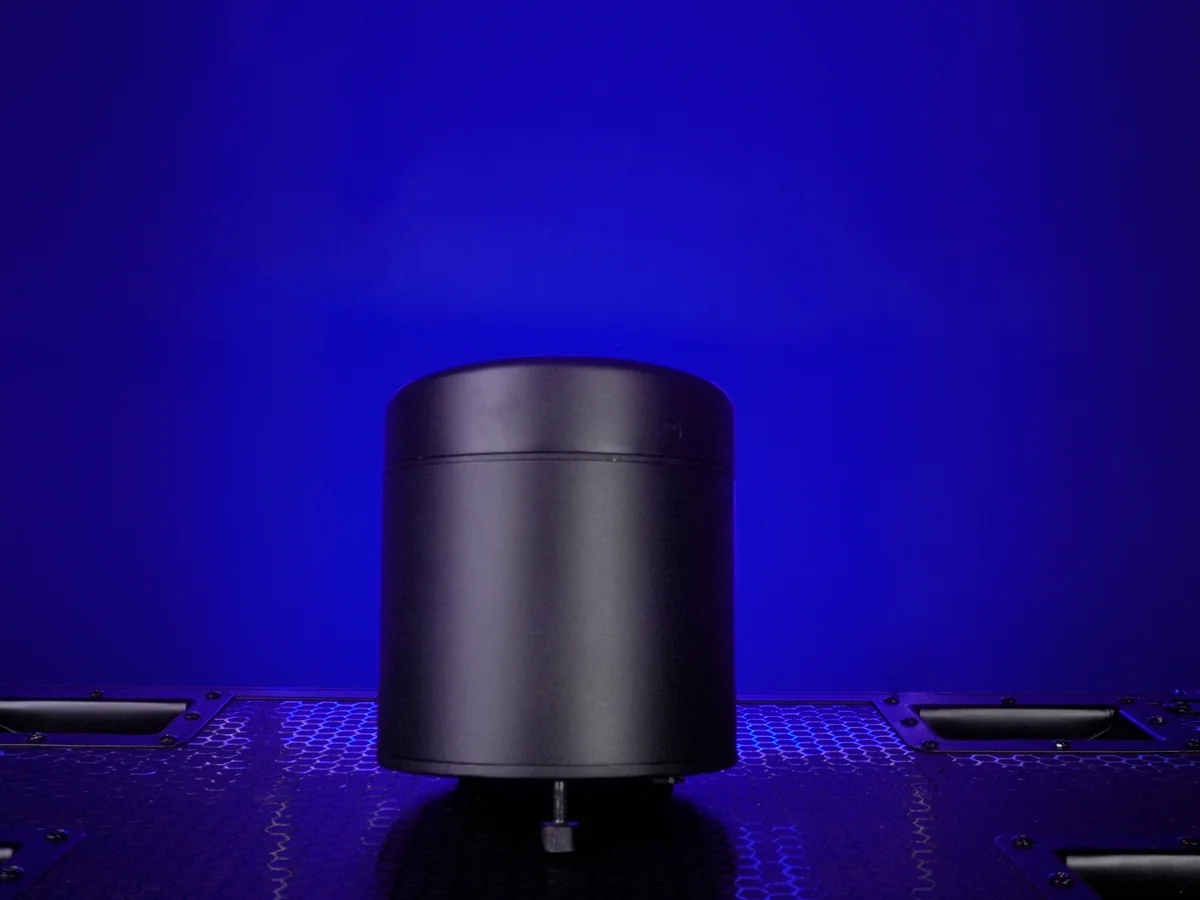
Floor-standing is the simplest choice when the target begins near floor level and a stable, level surface is available. Place the fixture near a wall, backdrop, column, or architectural feature, then confirm that it cannot be disturbed by doors, chairs, service carts, or guest traffic.
This position works well in hotel ballrooms, reception areas, wedding backdrops, and room perimeters. Floor standing uplights keep the installation visually simple because the body and support remain close to the architecture rather than projecting outward on a large side frame.
Confirm the surface, ventilation, beam direction, and public access before the event. If the floor slopes or the light must reach higher on the wall, another approved position may be more appropriate.
Angled Placement for More Accurate Wall Coverage
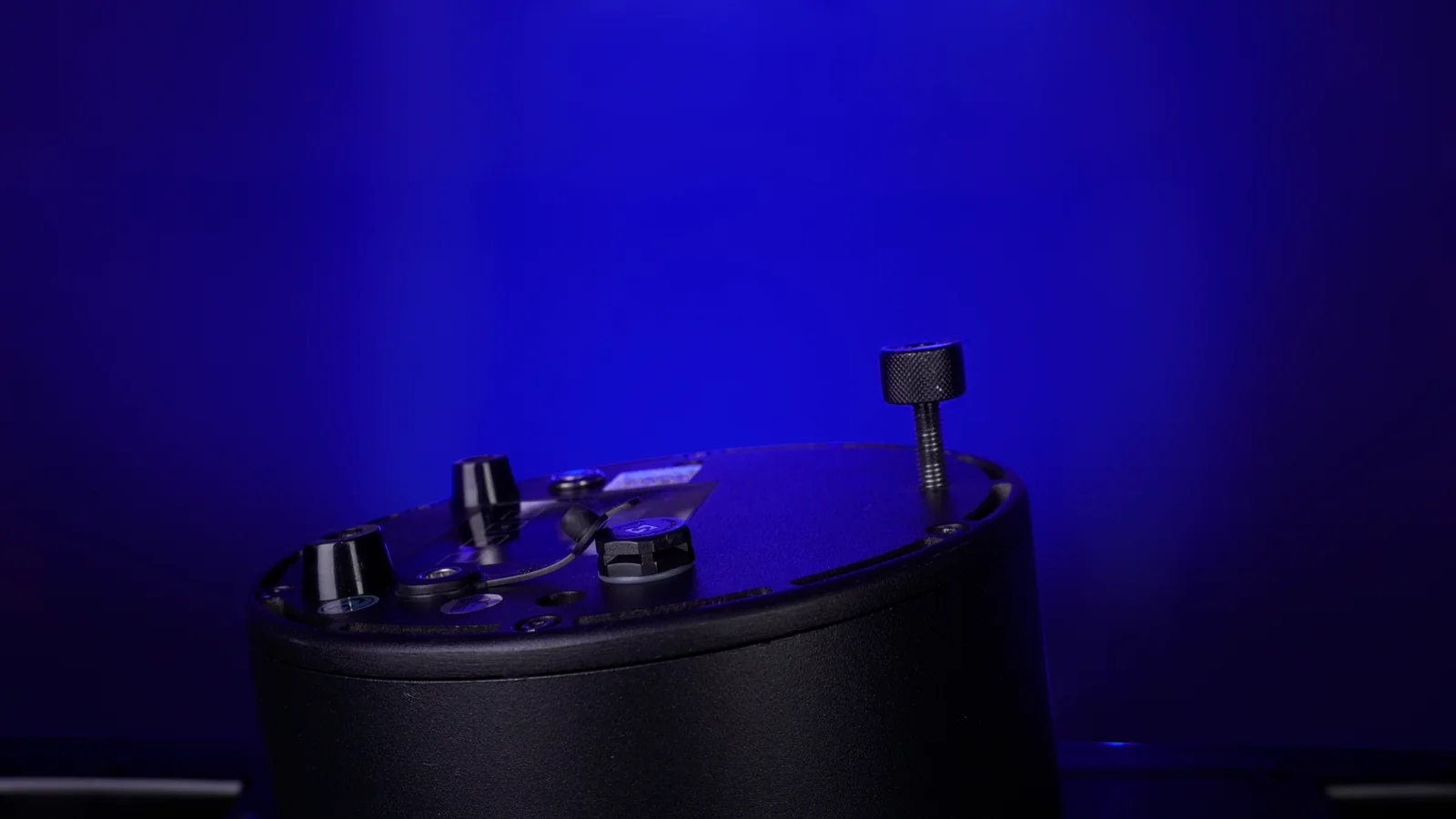
Angled placement changes where the beam meets the wall without forcing the fixture farther into the room. A verified lower support or adjustment point can raise the beam center, helping the light reach a taller column, a higher wall section, or scenic detail above the fixture.
This is useful when the uplight must sit close to a surface. A straight-up position can concentrate light near the bottom; careful tilting moves coverage toward the intended height. The result still depends on lens choice, distance, wall texture, ambient light, and output.
Adjustable angle uplights should use only the fixture's designed support positions. Do not estimate a mechanical range or add a makeshift wedge. Aim the light, then check that the support is fully seated and stable.
Hanging for Truss and Overhead Applications
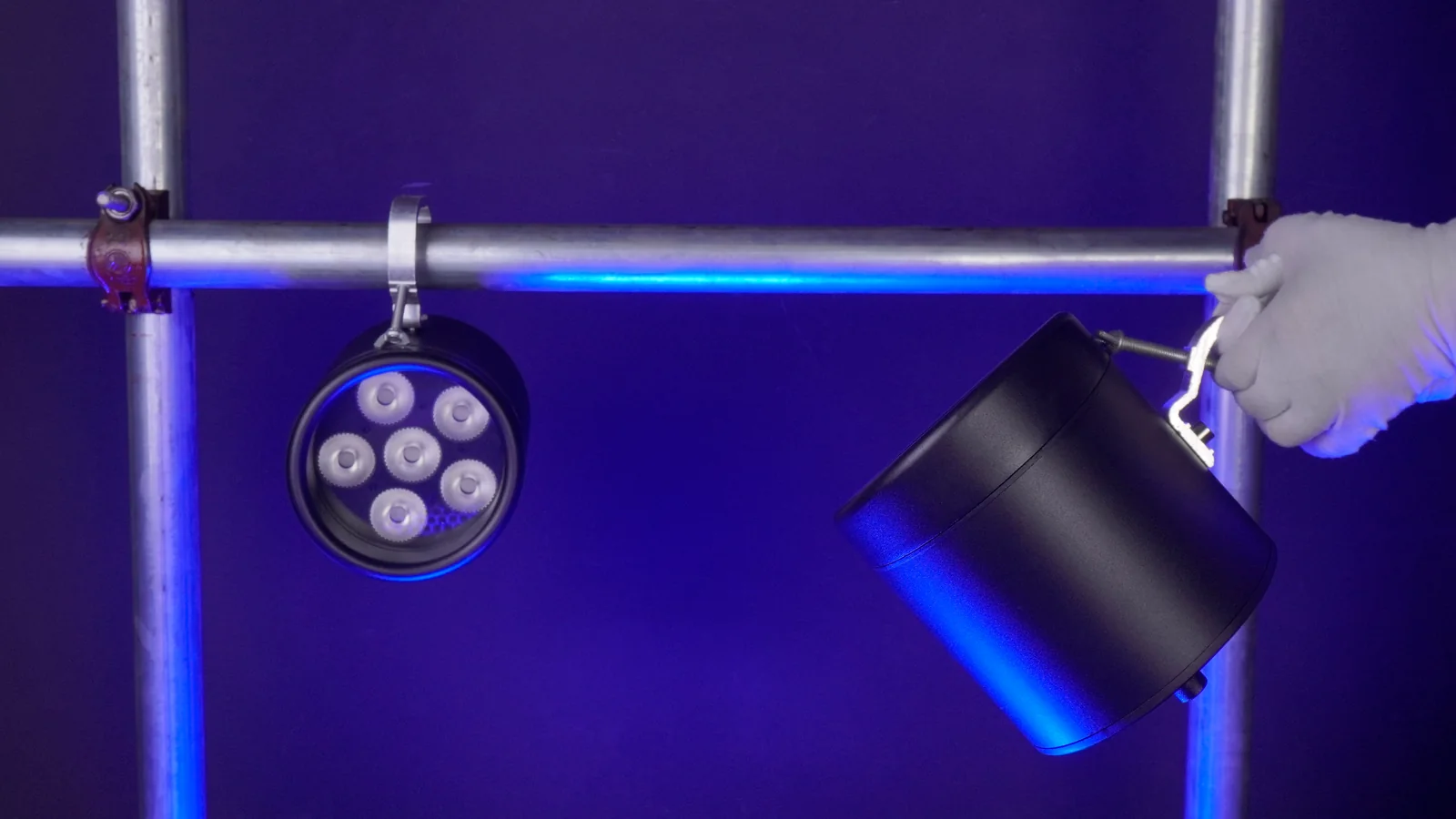
Hanging can keep the floor clear when a booth, temporary stage, scenic feature, or truss provides an approved mounting location. It can also direct light toward overhead décor or downward onto a controlled area that floor placement cannot reach.
Suspended installation requires more than a fixture that can physically hang. Use compatible, rated mounting hardware, follow the LumiUp Aqua P6 instructions, attach an independent safety cable, and comply with venue rules and local rigging requirements. The available product data confirms suspended mounting but does not publish a clamp model or working-load value, so those details must be selected and verified for the actual installation.
Keep hanging uplights away from moving scenery, heat sources, sprinkler coverage, and service access. Confirm the attachment and final aim before the area opens to other crews or guests.
Clean Fixture Design in Visible Event Spaces
A clean fixture design helps the light support the room rather than compete with it. In weddings, hotel functions, and formal events, uplights may appear beside pale walls, drape, floral work, branded scenic panels, or polished architectural finishes.
The LumiUp Aqua P6 uses a compact black cylindrical body with its six-lens face set inside the upper rim. Its positioning structure stays close to the body in the verified floor-standing and angled views, which reduces visual clutter compared with a large structure extending beside the fixture.
Compact does not mean invisible. The installation still needs a deliberate location and enough clearance. The value is that one clean form can remain consistent while its position changes to suit the target.
Choosing the Right Mounting Position for Each Venue
Choose the position by working backward from the illuminated target, then check whether the proposed location is stable, protected, and accessible. This table provides a starting point, not a substitute for a site-specific setup review.
| Venue or target | Recommended position | Reason |
|---|---|---|
| Ballroom wall | Floor-standing or angled | Keeps the placement compact while allowing controlled wall coverage |
| Wedding backdrop | Floor-standing | Maintains a visually simple installation near the scenic edge |
| Tall column | Angled | Directs more of the beam toward the required height |
| Truss or exhibition structure | Hanging | Keeps floor space clear when an approved overhead point is available |
| Theme park architectural feature | Floor-standing or angled in an approved position | LumiUp Aqua P6 has a published IP65 rating for weather-exposed theme park use |
Test the light on the actual surface. Dark stone, pale paint, reflective panels, drape, and foliage respond differently, while a sample setup reveals whether the fixture will interfere with room operations or photography.
What to Check Before Mounting a Battery Uplight
A reliable setup begins with the mounting position, not the color program. Complete the physical check before pairing control, focusing the look, or clearing the area for the event.
- Surface stability: Confirm that a floor position is level, firm, and outside impact or traffic zones.
- Support and bracket compatibility: Use only the fixture's intended adjustment points and compatible mounting hardware.
- Clamp and safety cable requirements: Suspended fixtures need rated hardware and an independent safety attachment.
- Fixture weight: Verify that every attachment point and hardware component is suitable for the complete installed load.
- Battery level: Include setup, event operation, likely schedule changes, and a practical reserve.
- Target height and beam direction: Check the wall, column, backdrop, or scenic element from the intended distance.
- DMX and wireless requirements: Confirm address, channel mode, transmitter compatibility, signal path, and a fallback look.
- Indoor or outdoor rating: Match exposed positions to the exact fixture's verified environmental rating and instructions.
- Access: Leave a safe way to remove, inspect, and recharge the fixture after the event.
Battery operated uplights remove an operating power lead from each position, but they do not remove these checks. Chargers, controllers, clamps, and safety equipment remain part of the complete working system.
One Fixture, More Event Applications
Multiple mounting choices allow the same fixture group to respond to more venues. A unit used upright along a ballroom wall can be angled toward a tall column on the next event, then assigned to an approved overhead position when the layout calls for clear floor space. This can reduce last-minute fixture substitutions while keeping a consistent housing shape and color system.
Cordless uplights are useful when a layout changes during a room turnover. Placement can be revised without moving a power-distribution route, provided the new position remains safe and verified runtime still covers the schedule. The practical gain is adaptability, not a promised percentage of labor or cost savings.
Where the LumiUp Aqua P6 Fits
The LumiUp Aqua P6 battery-powered uplight fits projects that need a compact battery-powered PAR light with verified floor-standing and suspended mounting, plus the lower support relationship shown in the product installation references. Its published product data identifies a 90W fixture with six 15W RGBWA+UV LED modules in a black, all-aluminum housing.
The fixture uses a 12,000mAh rechargeable 18650 lithium battery. Published runtime is about 3.5 hours with all RGBWA+UV channels fully lit, up to 16 hours in single-color use, and around 7 hours in the automatic program. The event look and reserve determine which figure is relevant.
Aqua P6 supports DMX512, built-in 2.4G wireless DMX512, WiFi app control, infrared remote, master-slave operation, and automatic programs. That verified control set supports the term wireless uplights, while battery power allows cable-free operation at the fixture.
Its published IP65 rating supports indoor and weather-exposed theme park use when connections, charging restrictions, mounting position, and instructions are followed. This supports the terms outdoor battery uplights and IP65 battery uplights without implying that charging equipment or every weather condition shares the same protection.
For broader planning, compare the setup-time and cable-clutter guide and the IP65 versus indoor uplight guide. These pages cover different questions from the mounting choices explained here.
Practical Setup Checklist
Use this short checklist before every floor, angled, or suspended installation:
- Confirm the intended mounting position and target.
- Inspect the feet, adjustment point, support, or bracket before use.
- Check battery status against the programmed output and event schedule.
- Set the required beam direction without exceeding the designed support position.
- Confirm wired DMX, wireless DMX, app, remote, or standalone settings.
- Use compatible, rated mounting hardware for suspended work.
- Attach an independent safety cable whenever the fixture is suspended.
- Confirm the IP65 operating conditions for any exposed outdoor position.
- Test the fixture and final look before guests enter the venue.
- Keep a safe access route for removal, inspection, and charging.
Frequently Asked Questions
Can battery powered uplights be hung from a truss?
Yes, if the exact fixture supports suspended mounting and the truss position is approved for the installation. LumiUp Aqua P6 product data confirms self-standing or suspended use, but it does not publish a specific clamp model or load value. Use compatible rated hardware, attach an independent safety cable, follow the fixture instructions, and comply with the venue's rigging policy and local requirements.
Can battery powered uplights be angled on the floor?
Yes, when the fixture includes a designed adjustment or support position. Angling can move the beam higher on a wall or column without placing the unit farther into the room. The support must sit fully and remain stable on a level surface. Do not use loose objects as wedges or claim an angle range that the product documentation does not specify.
Do battery uplights need a mounting bracket?
Not for every floor-standing application. A self-standing fixture can operate on a stable, level surface using its intended base or support. Angled and suspended positions may rely on a designed adjustment point, bracket, clamp, or other compatible hardware. Check the exact model because battery powered PAR lights do not all share the same mounting structure.
What is the best uplight position for a wedding venue?
The right position depends on the backdrop, wall height, fixture distance, guest routes, photography, and the intended beam shape. Floor-standing usually keeps wedding uplighting visually simple, while an angled position can reach a taller wall or column. Test the look before the room opens, keep fixtures outside traffic paths, and confirm that visible hardware does not distract from the décor.
Can the same battery uplight be used on the floor and overhead?
Yes, when the product is designed and documented for both positions. The LumiUp Aqua P6 source data lists self-standing or suspended mounting. Each installation still needs its own check: stable support and public-access protection on the floor, or rated hardware, an approved attachment point, and an independent safety cable overhead. Floor-use requirements do not transfer directly to a suspended setup.
Can battery powered uplights be used outdoors?
Only fixtures with a verified environmental rating and suitable instructions should be used in exposed conditions. LumiUp Aqua P6 has a published IP65 rating for indoor and weather-exposed theme park use. Keep charging equipment and connections within their own stated limits, follow the required mounting position, and do not treat IP65 as permission for immersion or every possible weather condition.
What should rental companies check before hanging an uplight?
Confirm that suspended mounting is approved for the exact model, then inspect the fixture attachment point, clamp compatibility, hardware rating, fixture weight, independent safety cable, truss or structure approval, aiming position, and removal access. Also check battery status and control before raising the unit. Venue rules, local regulations, and the manufacturer's instructions take priority over a generic installation example.
Conclusion
Battery powered uplights for events should adapt to the venue instead of forcing every venue into the same setup. Floor-standing, angled, and approved hanging positions let one compact fixture serve more walls, columns, backdrops, booths, and overhead details while maintaining a clean appearance.
The LumiUp Aqua P6 combines those verified positioning options with six RGBWA+UV LEDs, battery operation, wireless control, and an IP65 enclosure for suitable temporary outdoor work. Review the LumiUp Aqua P6, browse other LumiUp battery-powered lighting, or contact LumiUp with the venue, mounting position, required operating time, and control method for a focused recommendation and quote.