
Quick Answer
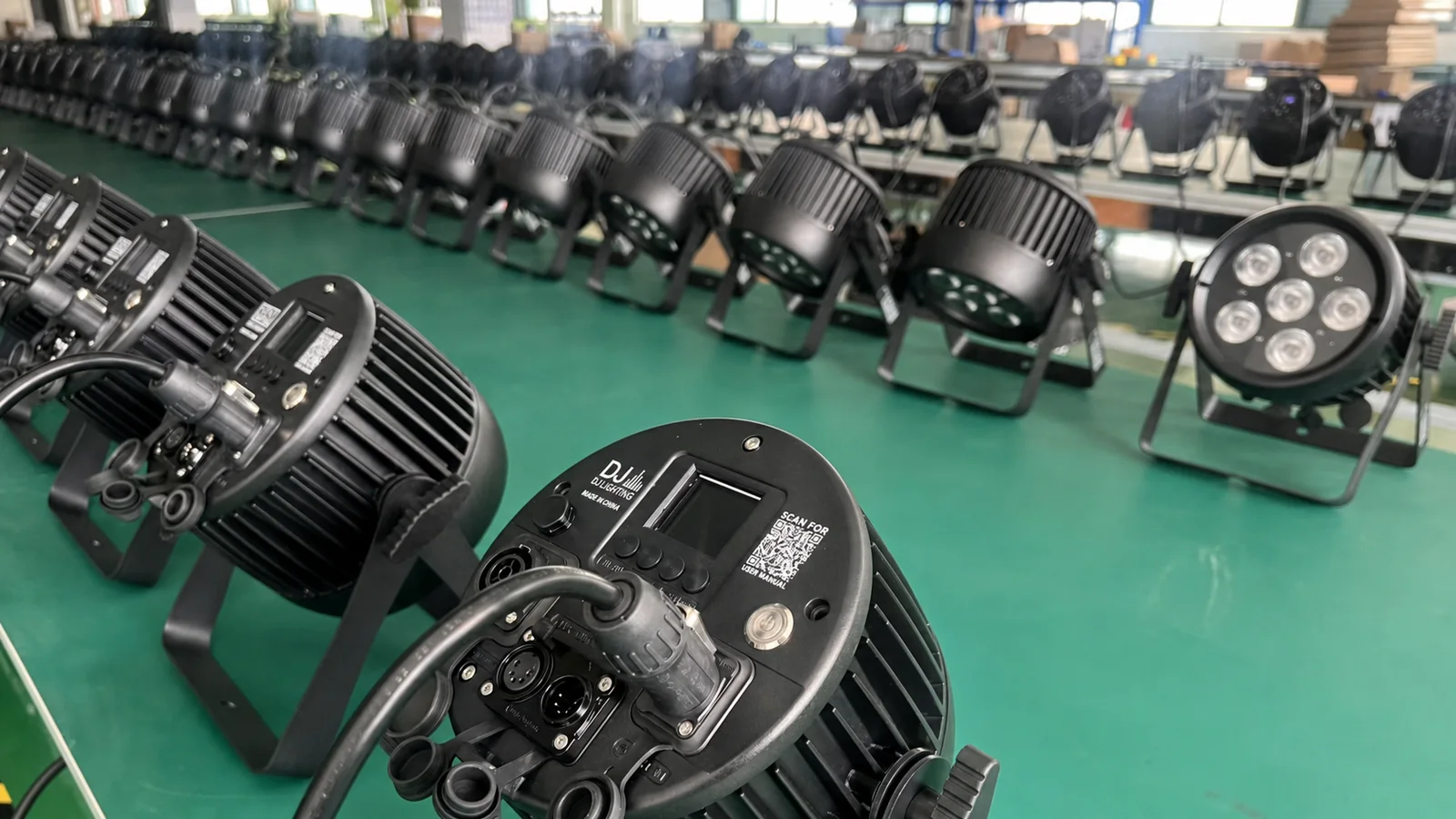
What problems do battery-powered uplights solve? Battery powered uplights reduce the cable runs, outlet searches, setup time, and visual clutter that complicate temporary event lighting. When the fixture is properly matched to the job, it can also make placement more flexible, support wireless control, and keep lighting available in spaces where mains power is inconvenient. The real advantage, however, depends on predictable runtime, suitable weather protection, appropriate optics, camera performance, quiet operation, and maintainable batteries.
Key Takeaways: Battery Powered Uplights
- Cordless placement can speed up setup and keep guest-facing spaces cleaner, but it does not remove the need for safe positioning.
- Wireless control needs a tested signal path, compatible equipment, sensible channel planning, and a fallback.
- Runtime claims are useful only when their operating conditions match the event.
- Weather rating, beam shape, camera behavior, cooling noise, and battery serviceability all affect the real value of a fixture.
1. Power Cables Slow Down Event Setup
Temporary lighting often begins with an outlet search. Power may be available only on one side of a ballroom, behind fixed furniture, or on circuits shared with other equipment. Every extension lead creates another route to plan, secure, inspect, and remove when fixtures are distributed around walls, columns, entrances, or gardens.
Cordless event uplighting changes that workflow. A charged fixture can be placed where light is needed instead of near an outlet. Crews can adjust spacing after décor arrives, move a unit away from a guest route, or refine a backdrop without rebuilding a cable run. Fewer visible cables also protect the appearance of guest-facing spaces.
Fixtures still need stable surfaces, protection from impact, and clearance from walkways. Battery models should not replace every wired light: permanent installations, exceptionally long programs, or sustained full-output operation may be better served by mains power. Use each method where it reduces work without creating a new risk.
For a closer look at load-in planning, see the guide to saving setup time and reducing cable clutter.
2. Wireless Control Should Be Reliable, Not Just Convenient
Wireless DMX uplights can remove data cables as well as power cables, improving layout flexibility and shortening setup and strike. That benefit depends on testing the complete control path.
Published range is not a promise for every venue. Walls, metal scenery, audience density, truss, equipment racks, and transmitter position can affect the path. Congestion in the 2.4 GHz band adds another variable. Test from the actual control position to the farthest fixture with likely obstructions and the busiest show state.
Confirm the supported protocol and transmitter; similarly named systems are not automatically compatible. Check reconnection and whether signal loss holds the last look, blacks out, or triggers another behavior. For critical work, document a tested standalone scene or wired-control fallback where provided. Confirm LumiUp protocol support at model level.
3. Battery Runtime Must Be Predictable
The useful question is whether fixtures will cover setup, the live program, delays, and a sensible reserve in the actual show mode. A headline answer to “how long do battery uplights last?” cannot do that without test conditions.
Brightness and active color channels change power demand; one color, a mixed color, and full white may not draw the same load. An RGBW battery uplight may differ from a fixture with another LED engine or driver. Usable energy also changes with pack age, temperature, charging history, and storage. Wireless receivers, displays, effects, and runtime modes add variables.
| Runtime Factor | How It Affects the Fixture | What to Check Before an Event |
|---|---|---|
| Brightness level | Higher output usually increases power demand | Test the intended dimmer level, not a reduced demo setting |
| Color and channel use | Single colors, mixed colors, and full white can draw different loads | Reproduce the actual palette or programmed scene |
| Battery capacity and condition | Stored energy and age affect the usable reserve | Confirm model-level capacity and test representative fleet units |
| Temperature | Cold can reduce available performance; heat can accelerate wear | Test near expected conditions and follow operating limits |
| Wireless and display functions | Active electronics add to the fixture load | Leave required show functions enabled during testing |
| Runtime mode | Output-limiting modes may trade brightness for duration | Record the exact mode and its visual result |
| Charging and storage | Poor habits can reduce consistency over time | Follow the approved charger and documented storage routine |
A credible battery uplight runtime test starts with approved equipment and a full charge, uses the actual scene, keeps required control active, records the environment, and defines the end point. Numbering fixtures and logging results makes capacity loss easier to find. The guide to runtime, charging, and battery care explains representative testing in more detail.
4. Battery Management Affects Long-Term Reliability
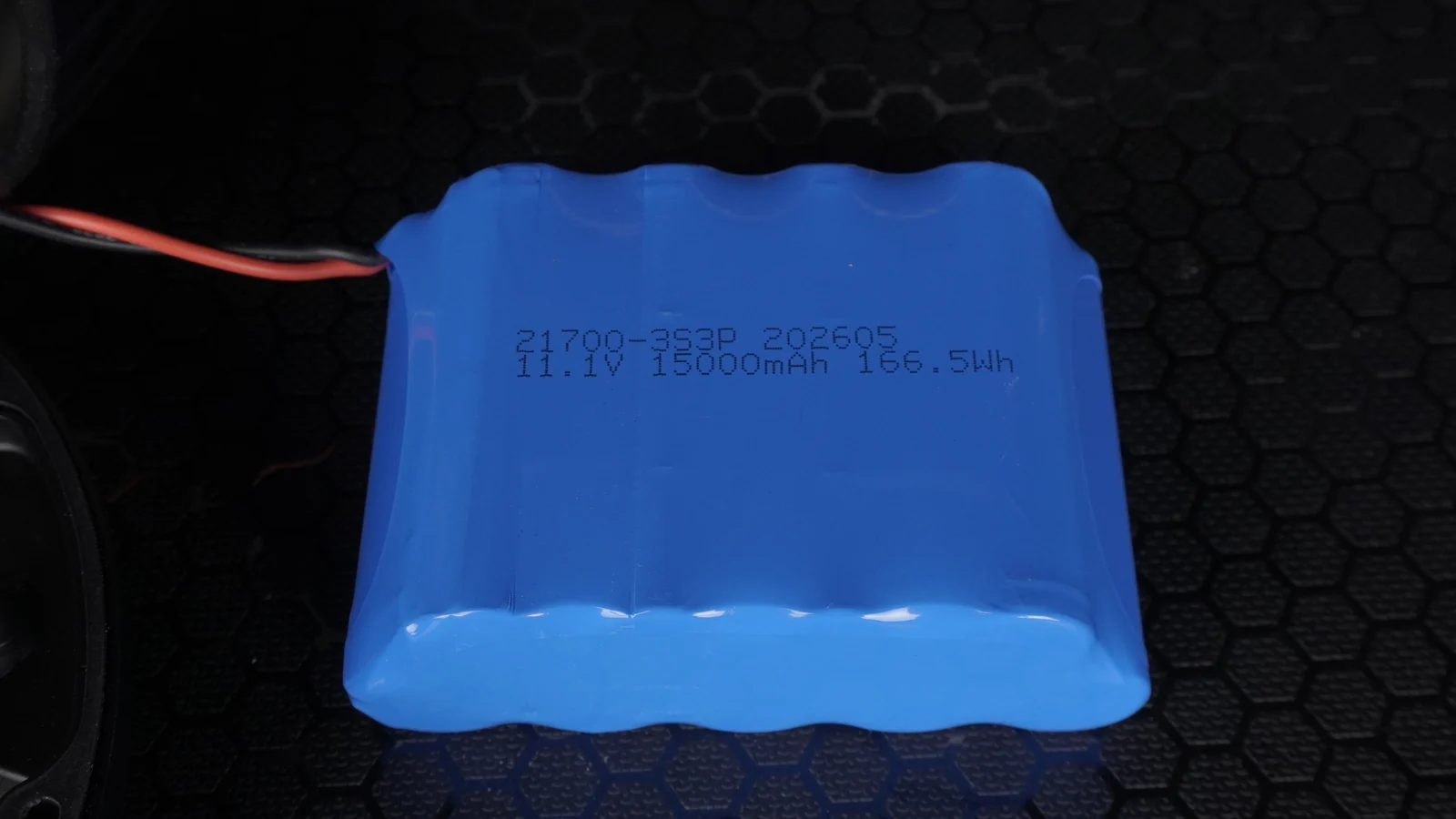
Battery performance is also a maintenance issue. Deep discharge, high-temperature storage, leaving depleted units idle, and unapproved charging equipment can shorten useful capacity. Do not address “overcharging” with an improvised timer or charger; use the approved system and documented procedure.
A seasonal fleet still needs attention. Record charge status, follow specified storage and inspection intervals, and remove units with swelling, damaged wrapping, exposed wiring, unusual odor, abnormal heat, or repeated charging faults. Track each fixture so capacity fade is not hidden inside a case.
The photographed pack below shows why capacity markings, protection design, connections, condition, and service access deserve review during uplight battery maintenance. Its visible label can be documented, but the photo does not prove internal protection features or assign the pack to every LumiUp model. Confirm authorized replacement, permitted work, spare parts, warranty, and after-sales support. Never rebuild a wrapped pack without an approved procedure.
5. Outdoor Events Require More Than a Waterproof Label
Outdoor battery uplighting can remove long power runs, but battery operation provides no weather protection. An IP rating belongs to a specific tested enclosure and condition. IP65 battery uplights address dust ingress and water jets under defined tests; IP65 does not allow immersion or standing water.
For a model-level comparison, the LumiUp Aqua P6X IP65 battery PAR is positioned for outdoor event and rental work, while the LumiUp Core P6 indoor battery PAR is intended for protected venues. Confirm the operating limits of the exact approved configuration.
Ports, connectors, and covers must be in their required closed position. Chargers and cases may not share the fixture’s rating. Avoid drainage paths and low points, respect temperature limits, and let wet or cold units acclimate as instructed so condensation is not trapped during charging or storage.
Before exposed use, inspect covers, connectors, seals, fasteners, and housing. Check the forecast and plan for conditions beyond the documented limits. Confirm the exact LumiUp model instead of generalizing one rating across the range.
6. One Beam Angle Does Not Fit Every Venue
The battery uplight beam angle determines spread and concentration. A narrow beam may emphasize a tall feature but leave gaps across a low wall. A wide distribution can cover more surface at close range yet lose the focused reach needed for a high façade.
| Beam Type | Suitable Applications | What to Consider |
|---|---|---|
| Narrow beam | Columns, tall walls, architectural accents, focal points | Precise aiming, fixture distance, visible gaps, and intensity on the surface |
| Medium beam | Ballrooms, wedding backdrops, general wall uplighting | Spacing, overlap, wall height, ambient light, and visual rhythm |
| Wide beam | Short throw, broad areas, low walls, close placement | Spill onto floors or décor, reduced reach, and uniform overlap |
These are application categories, not fixed degree ranges. Verify the supplied optic on a representative surface. Wall color, texture, ambient light, distance, tilt, and mounting height can change the result. The uplight spacing guide connects beam shape with perimeter and quantity.
7. Cameras and Quiet Venues Reveal Fixture Quality
A light can look steady yet produce flicker, dark bands, or unstable exposure on camera. LED modulation, dimmer level, frame rate, shutter, and sensor readout can reveal hidden problems. Poor low-level dimming may appear as stepping, abrupt drop-out, or uneven color changes.
Do not treat “flicker-free LED uplight” as a sufficient specification. Review available refresh information, then test the exact fixture, mode, color, and dimmer level with the planned cameras. Slow motion and high shutter speeds can be especially demanding.
Weddings, churches, theaters, studios, and corporate conferences contain quiet speech, music, or close microphones. Fan changes or mechanical noise may be obvious there. If a project calls for a silent battery uplight, verify cooling across the intended output and temperature range. “Fanless” and “completely silent” require model-level evidence.
Battery-Powered Uplight Buying Checklist
Use a written checklist to compare what an event needs with evidence for the exact fixture:
- Verified runtime: Test conditions, brightness, colors, end point, temperature, and reserve.
- Battery: Capacity in watt-hours, charging time, approved charger, protection documentation, status indication, and replacement options.
- Control: Wireless DMX compatibility, transmitter requirements, practical range test, signal-loss behavior, and wired-control backup where supported.
- Environment: Exact IP rating, connector state, operating limits, condensation procedure, and charging restrictions.
- Optics and color: Supplied beam angle, photometric evidence, field coverage, color consistency, and repeatability across units.
- Camera performance: Refresh or modulation data, flicker testing at relevant camera settings, low-level dimming, and color transitions.
- Acoustics and thermal behavior: Cooling method, fan behavior, noise under load, and performance in expected temperatures.
- Mechanical and service support: Housing durability, mounting stability, warranty terms, spare parts, authorized battery replacement, and after-sales support.
Test a sample in the intended venue and document acceptance criteria so production units are not judged by appearance or a short demonstration.
Final Thoughts
The real value of battery powered uplights is faster setup, cleaner spaces, flexible placement, and fewer cable routes. Those advantages depend on reliable control, predictable runtime, suitable weather protection and optics, stable camera performance, low noise, and maintainable batteries.
Start with the event: define the schedule, color, brightness, cameras, sound sensitivity, placement, weather, control, charging turnaround, and service expectations. Then verify the exact fixture in representative conditions.
Browse LumiUp lighting products to compare available formats, or contact LumiUp with your venue, operating time, control, environmental, and maintenance requirements for a model-level review.
Frequently Asked Questions
How long do battery-powered uplights last?
There is no universal runtime. Duration depends on usable energy, brightness, active LED channels, control functions, temperature, battery condition, runtime mode, and the test end point. Use a published figure only when those conditions match the show. Test representative units with the actual scene and keep reserve for setup, delays, and normal fleet variation.
Can battery uplights be used in the rain?
Only when the exact fixture has a verified rating and suitable instructions. IP65 does not permit immersion, and a rated fixture may not share protection with its charger or an open connector. Close covers, inspect seals and ports, avoid standing water, follow temperature and condensation procedures, and stop if conditions exceed documented limits.
What is the best beam angle for uplighting?
There is no single best angle. Narrow beams emphasize columns and tall features; medium beams often suit ballroom walls and backdrops; wide beams cover low surfaces from short distances. Results also depend on distance, wall height, color, texture, ambient light, tilt, and spacing. Test the supplied optic before deciding quantity or placement.
Do battery-powered uplights need wireless DMX?
No. Battery power and wireless data are separate features. A fixture can run a standalone scene, respond to a compatible wireless system, or use wired DMX when provided. Choose control around the show and venue. Confirm protocol, transmitter requirements, signal-loss behavior, practical range, interference, and a fallback before the event.
Why do LED uplights flicker on camera?
LED drivers may modulate output at a frequency that interacts with frame rate, shutter, and sensor readout. This can produce flicker, dark bands, or unstable exposure even when the light looks steady. Low dimmer levels can reveal more issues. Test the exact fixture, mode, color, dimmer value, and camera settings, including slow motion where required.
How long does it take to charge a battery uplight?
Charging time depends on the battery, approved charger, starting level, temperature, and charging system. Do not infer it from capacity or another model. Confirm the exact configuration and documented test conditions. For a fleet, calculate how many units charge simultaneously and whether turnaround includes cool-down, inspection, fault handling, packing, and dispatch.
How should battery uplights be stored between events?
Follow the manual for storage charge, temperature, inspection, and approved charging equipment. Keep fixtures dry, protected, and away from heat and combustible clutter. Do not leave depleted units idle or invent a universal storage percentage. During long storage, perform documented checks and remove units showing swelling, damage, unusual heat, odor, or charging faults.
Can the battery be replaced after several years?
It depends on construction, spare parts, warranty, and the authorized procedure. Some packs may be service-replaceable; others require qualified work. Confirm replacement options, the correct part, connector, protection design, and disposal process for the exact model. Never open a wrapped pack or substitute cells based only on voltage and size.