
Quick Answer
Soft carry bags cost less and are commonly used for compact four- or six-light packages. Charging flight cases combine transport, storage and charging in one configured system, with LumiUp options available for 6, 8 or 10 lights. The better choice depends on the exact fixture, the internal fit, the number of lights you want in each dispatch set, the fully loaded handling weight and what the supplier has included in the written quotation. Capacity alone does not prove compatibility or charging capability.
Soft Carry Bags vs Charging Flight Cases at a Glance
The useful comparison is between a soft transport bag and a flight case built with a compatible charging configuration—not an empty protective road case. Both can be professional choices when matched to the job.
Swipe horizontally to compare all columns.
| Buying factor | Soft carry bag | Charging flight case |
|---|---|---|
| Purchase cost | Lower initial cost | Higher initial cost because the case combines a rigid enclosure, fitted layout and charging hardware |
| Common package sizes | Often used for four- or six-light sets; the LumiUp LU-SB4 is specifically a four-light bag | LumiUp LU-FC-CHG is offered in 6-, 8- and 10-light configurations |
| Storage and protection | Divided, soft-sided organization for compatible compact fixtures | Rigid, compartmented storage for the fixture and case configuration ordered |
| Charging configuration | A carry bag is not a charger; lights use their separately approved charging method | Charger is part of the LU-FC-CHG package, subject to the exact fixture and electrical configuration |
| Weight and size checks | Empty bag weight, internal compartment dimensions, loaded weight and carrying method | Empty configured-case weight, compartment dimensions, loaded weight, external dimensions, wheels and vehicle access |
| Package organization | Easy to split a fleet into smaller four- or six-light dispatch sets | Consolidates larger sets and can keep transport, storage and charging in one workflow |
Cost should be compared against the complete workflow. A bag may be the efficient answer for small kits and split deliveries. A charging case may justify its higher purchase cost when crews repeatedly return, store, charge and dispatch larger groups of compatible fixtures.
When a 4- or 6-Light Soft Carry Bag Makes Sense
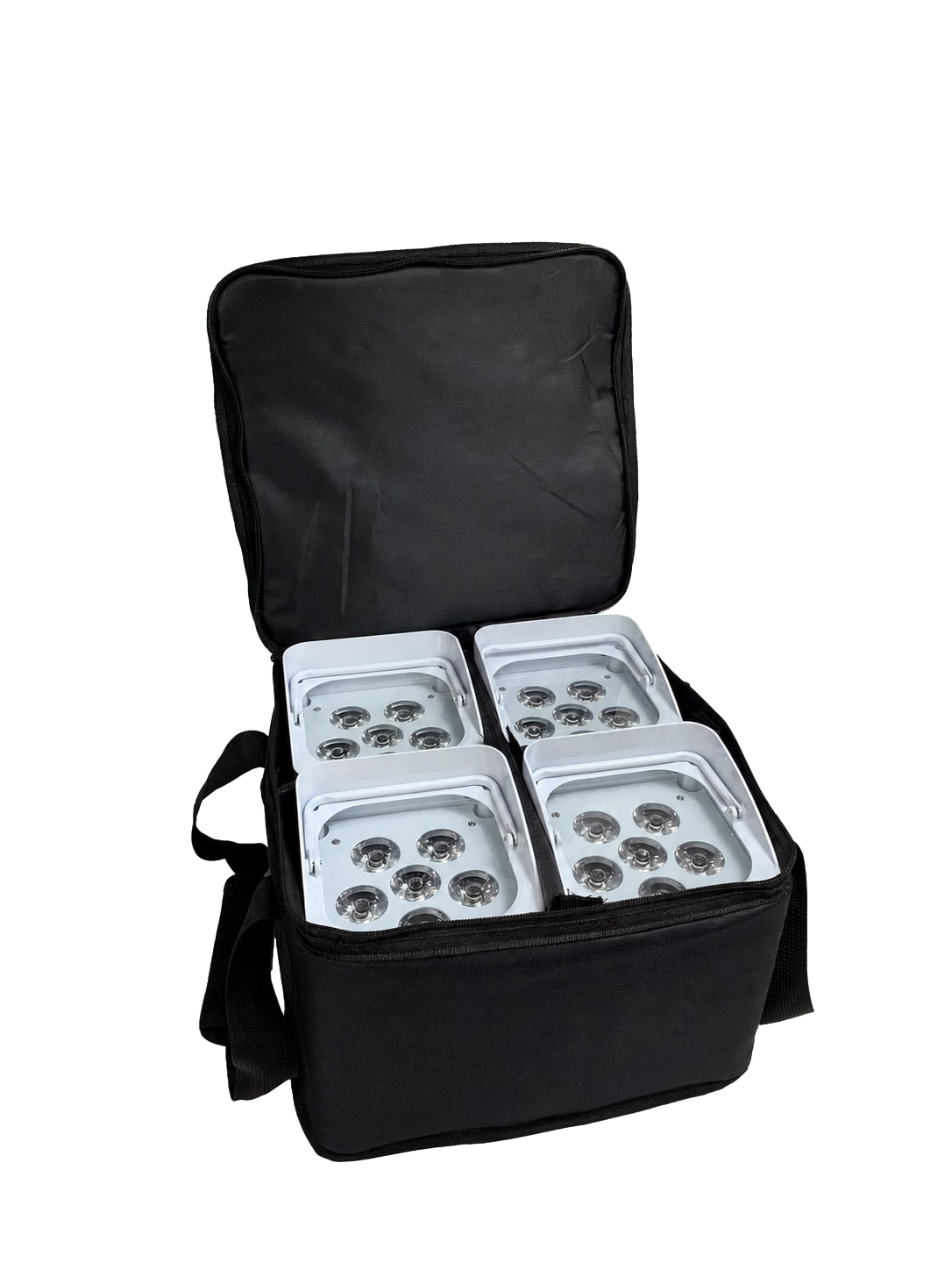
A soft carry bag suits buyers who need a lower-cost transport option, work with small fixture groups or regularly divide inventory between crews. Mobile DJs and wedding suppliers may send four lights to a small room and another four to a ceremony area. Rental companies may prefer several small packages when orders leave in separate vehicles or return at different times.
The LumiUp LU-SB4 four-light carry bag has four separated positions, a zip-around closure, carry handles and a shoulder strap. It is designed for four compatible compact battery lights. “Four-light” describes the number of fixture positions; it does not mean that any four battery uplights will fit.
For a six-light kit, request a carry bag matched to your chosen fixture. The LU-SB4 is a four-light model, so a six-light package should be specified separately in your quotation.
Soft bags also keep dispatch sets easy to count. Four bags can represent four six-light kits, for example, while each kit can leave independently. The trade-off is that the lights still need their approved charging equipment and a suitable charging area. The bag organizes transport and storage; it does not add a charging function.
Why Choose a Charging Flight Case?
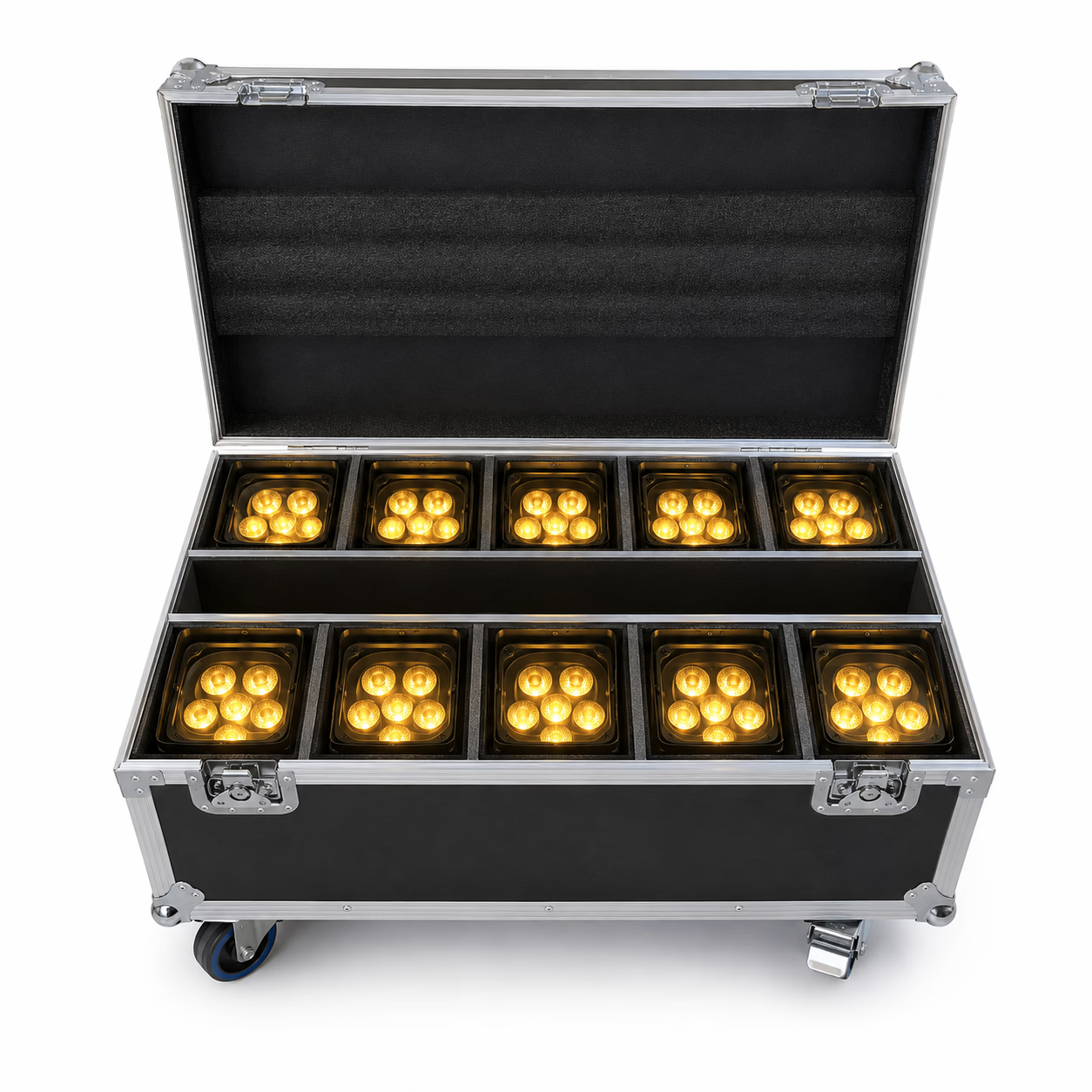
A charging flight case can reduce the number of separate handling stages. Compatible lights return to assigned positions, remain organized in storage and use the charging system configured for that case. This is especially useful for rental warehouses, distributors preparing demonstration fleets and event suppliers that repeatedly move larger sets.
The LumiUp LU-FC-CHG charging flight case is available in 6-, 8- and 10-light configurations. Its layout can be selected around the light model and package requirement, making it a configured system rather than a universal box.
The benefit is workflow consolidation rather than faster charging. Confirm the charging connections and the number of lights that can charge at the same time for your selected configuration. Follow the supplied instructions for power, ventilation and lid position. For a broader comparison of adapters, cases, contact bases and removable packs, read the battery-uplight charging-options guide.
Will Your Battery Uplights Actually Fit?
Slot count is only the first check. A bag or case can have enough positions and still be unsuitable for a particular fixture. Ask for a fit confirmation against the exact model and production version, then check:
- the fixture’s real packing dimensions with its normal bracket or handle position;
- the clear width, depth and height of each compartment;
- clearance for loading and lifting the light without scraping controls, lenses or connectors;
- space for chargers, power leads, remotes and other accessories;
- the orientation required for storage and transport;
- any padding, dividers or lid foam included in the quoted configuration.
Do not infer compatibility from LED count, a similar housing or a product photograph. A “six-light case” describes the number of positions, not universal fit or a rated load for every fixture.
The LU-SB4 holds four compatible compact battery lights, while LU-FC-CHG is available in 6-, 8- and 10-light configurations. Ask the supplier to state the compatible fixture model and case or bag layout in the quotation.
How to Calculate the Fully Loaded Weight
Buyers often receive several different weight figures. Keep them separate:
- Fixture weight for the calculation: use the weight of one light with its battery installed. Confirm whether the supplier’s quoted net weight includes the battery.
- Empty bag or configured-case weight: include dividers, foam, wheels and built-in charging parts that belong to the supplied package.
- Fully loaded transport weight: the package as the crew will move it between warehouse, vehicle and venue.
- Shipping gross weight: the loaded package plus export carton, pallet, protective material and any separately packed accessories.
Use this formula for the handling figure:
Loaded package weight = total fixture weight with batteries installed + empty bag or case weight + accessories not already included in that weight
For a package holding eight identical fixtures, “total fixture weight” is eight times the battery-included fixture weight confirmed for the order. Add accessories only once. If the published empty-case weight already includes its built-in charger, wiring, dividers and wheels, do not add those components again.
Request both the calculation and a scale reading for the final sample configuration. The scale check captures changes caused by the selected foam, charger, cables or hardware. It also gives operations a realistic figure for vehicle loading and on-site handling.
Choose the package around its fully loaded weight and external dimensions, as well as its handles or wheels, vehicle loading method, stairs and access at the venue. Fewer cases do not automatically mean a lower total weight or easier handling; a larger case can concentrate more mass into one package.
Choosing Between 4-, 6-, 8- and 10-Light Packages
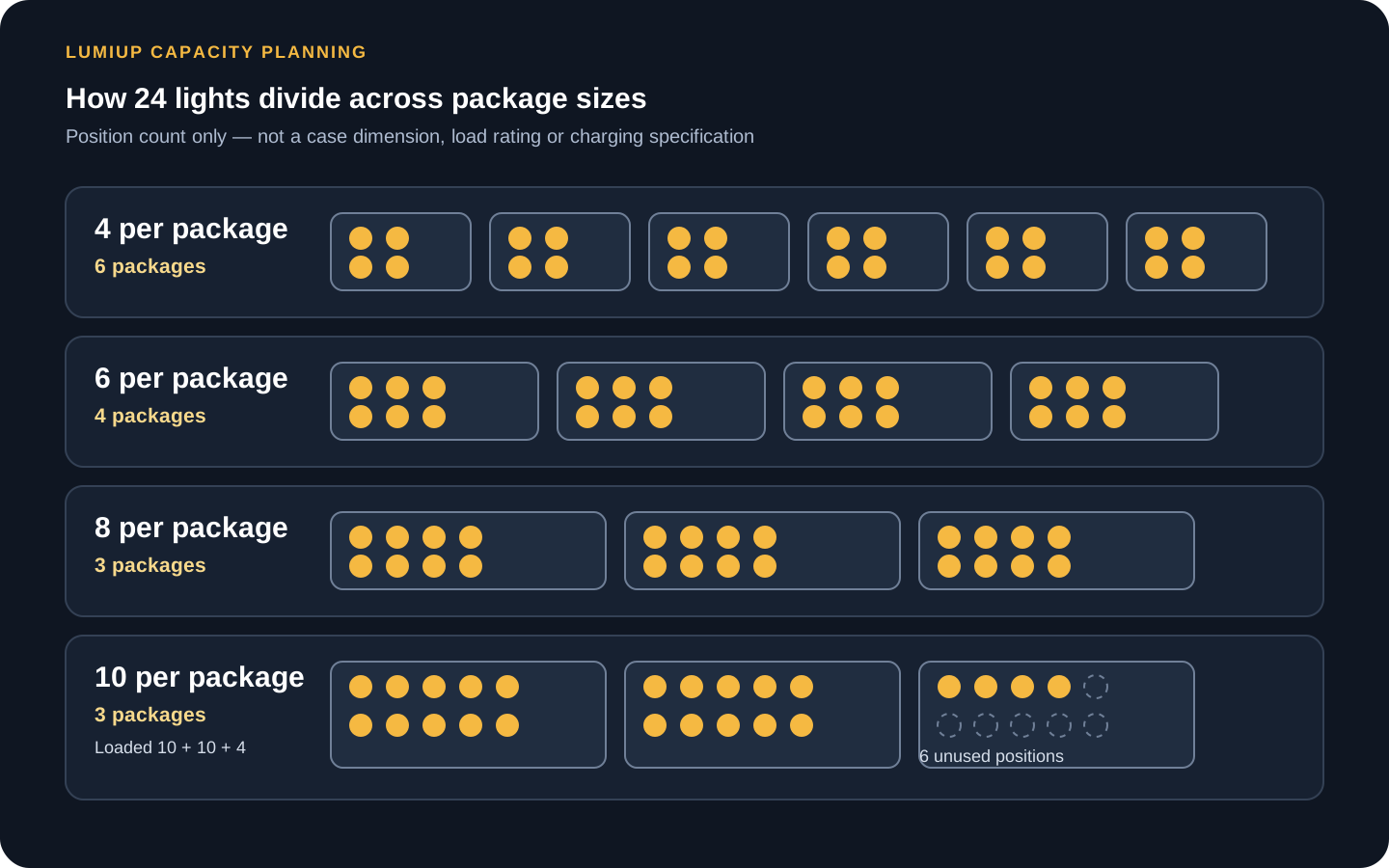
Package capacity affects counting, dispatch and vehicle layout. The table below uses the same 24-light order so the differences are visible.
Swipe horizontally to compare all capacities.
| Capacity per package | Packages needed for 24 lights | Loading plan | Operational observation |
|---|---|---|---|
| 4 lights | 6 | 4 + 4 + 4 + 4 + 4 + 4 | Small dispatch sets; more individual packages |
| 6 lights | 4 | 6 + 6 + 6 + 6 | Even division into four medium sets |
| 8 lights | 3 | 8 + 8 + 8 | Three full packages |
| 10 lights | 3 | 10 + 10 + 4 | Two full packages and one partially filled package |
For 24 lights, a ten-light package does not reduce the case count below the eight-light plan: both require three packages. The 10 + 10 + 4 arrangement leaves six positions unused. For 30 lights, three 10-light cases use all available positions, while 8-light cases require four cases.
These examples compare package counts only; they do not calculate cost, freight, weight, rated load or charging capacity. Choose capacity around the total fixture quantity, the kits you dispatch, split-event needs, vehicle space and the measured fully loaded weight. For charging batches and turnaround time, use the separate fleet-turnaround planning guide.
Is the Carry Bag or Charging Case Included in the Quote?
“Available,” “quoted separately” and “included in the package price” mean different things. A product photo may show lights inside a bag or case without including both items in the same line price. The LU-SB4 page, for example, states that the lights shown are not included.
Ask the supplier to itemize the following fields:
Swipe horizontally to review every quotation field.
| Quotation field | What the buyer should see in writing |
|---|---|
| Fixture model and quantity | Exact SKU/version and number of lights |
| Packaging type | Soft carry bag or configured charging flight case |
| Capacity | Lights per bag or case |
| Package quantity | Number of bags or cases supplied |
| Charging configuration | Included, optional or separately quoted; matched charger/case identity |
| Other accessories | Cables, adapters, remotes, spare batteries, covers or other listed items |
| Dimensions and weight | Internal fit dimensions, external dimensions, empty weight, calculated loaded weight and shipping gross weight as applicable |
| Destination | Country, input supply and required plug |
Keep the units explicit. A unit price per light is not a price per bag, and a price per case is not necessarily the price for a complete kit of lights. The final written quotation should label every line as included, optional or separately quoted. If private-label cartons, markings or dealer packaging are also required, handle those details in the private-label packaging and labeling specification rather than relying on transport-case photos.
Frequently Asked Questions
Do battery uplights come with a carry bag?
Not automatically. A carry bag may be available, quoted separately or included in a complete package. Check the written quotation for the exact fixture, bag model and quantity.
Can I order a six-light soft carry bag?
A six-light soft-bag configuration may be quoted for a compatible fixture. It should be specified separately: LumiUp LU-SB4 is a four-light bag, not a six-light model.
Will a four-light carry bag fit every battery uplight?
No. Four positions describe capacity, not universal compatibility. Confirm fixture dimensions, bracket position, clear compartment dimensions and loading clearance for the exact model.
Do flight cases include chargers?
The LumiUp LU-FC-CHG is supplied with a charger. Confirm that the charging configuration in your quotation matches the selected fixture, and distinguish a charging flight case from a transport-only case when comparing options.
Can I order an eight- or ten-light charging flight case?
Yes. LU-FC-CHG is offered in 6-, 8- and 10-light configurations. Confirm which fixture fits and the operating conditions for the selected version.
How do I confirm the fully loaded weight?
Add the battery-installed fixture weights, the empty configured bag or case weight and accessories not already counted. Then ask for a scale reading of the final sample configuration.
Request a Transport & Charging Package Quote
Send LumiUp the fixture model, total quantity, preferred number of lights per bag or case, whether you need a charging flight case and the destination country. LumiUp can then prepare an itemized package proposal showing capacity, compatibility, charging configuration and included accessories.