
Quick Answer
Yes—professional battery-operated uplights are commonly rechargeable, because “battery-operated” describes how the light runs while “rechargeable” describes how its battery is restored. They are not opposing categories. Buyers should compare the actual charging architecture: an adapter connected to each fixture, a multi-light charging flight case, a powered drop-in contact base, or a removable pack that charges separately. Each option changes handling, charging capacity, turnaround, spares, storage, and maintenance; verify model-specific documentation before ordering.
“Battery-Operated” and “Rechargeable” Describe Different Things
A battery-operated uplight draws power from a battery while it is running. A rechargeable uplight uses a battery designed to receive energy again through an approved charging system. One term describes operation; the other describes replenishment.
Product listings become confusing when they also use “wireless” for battery operation or a data link such as wireless DMX. It does not define charging. Buyers comparing wireless battery uplighting systems should separate three layers:
Swipe horizontally to compare all columns.
| System layer | Question it answers | Evidence to request |
|---|---|---|
| Power during use | Does the fixture run from a battery, mains power, or both? | Exact fixture specification and operating manual |
| Control signal | Is control standalone, wired DMX, wireless DMX, app-based, or another method? | Protocol, transmitter and receiver compatibility |
| Charging connection | How does approved power reach the battery after use? | Charger, base, case or pack-charger identity and instructions |
Battery Operation Is Not the Same as Wireless Control
A fixture can run from its battery without supporting wireless DMX. It can also support wireless DMX while charging through a physical connector or powered contact base. Control compatibility belongs in the show-system specification; charging compatibility belongs in the fleet and electrical plan.
Rechargeable Does Not Identify the Charging Hardware
The word “rechargeable” is incomplete unless the quotation identifies the approved charger, electrical input, destination plug, connection method, status indication, environment, and compatible hardware revision. A connector that fits physically is not evidence of electrical compatibility.
Common Battery Structures in Professional Uplights
Professional fixtures commonly use an integrated battery or a removable battery pack. Neither structure is automatically better. The right choice depends on service access, turnaround, inventory control, enclosure design, and the buyer’s maintenance capability.
Swipe horizontally to compare both battery structures.
| Battery structure | Charging workflow | Procurement questions |
|---|---|---|
| Integrated rechargeable battery | The complete fixture usually stays at the charging position | Who may replace the battery, which charger is approved, and how long are service parts available? |
| Latch-secured removable pack | The pack can move to an approved separate charger | How are packs identified, inspected, stored, installed, and matched to compatible fixtures? |
Integrated Rechargeable Battery
An integrated design keeps the light and battery as one operational unit. The buyer still needs a written replacement route covering authorized service, approved parts, lead time, warranty, and enclosure checks.
Latch-Secured Removable Battery Pack
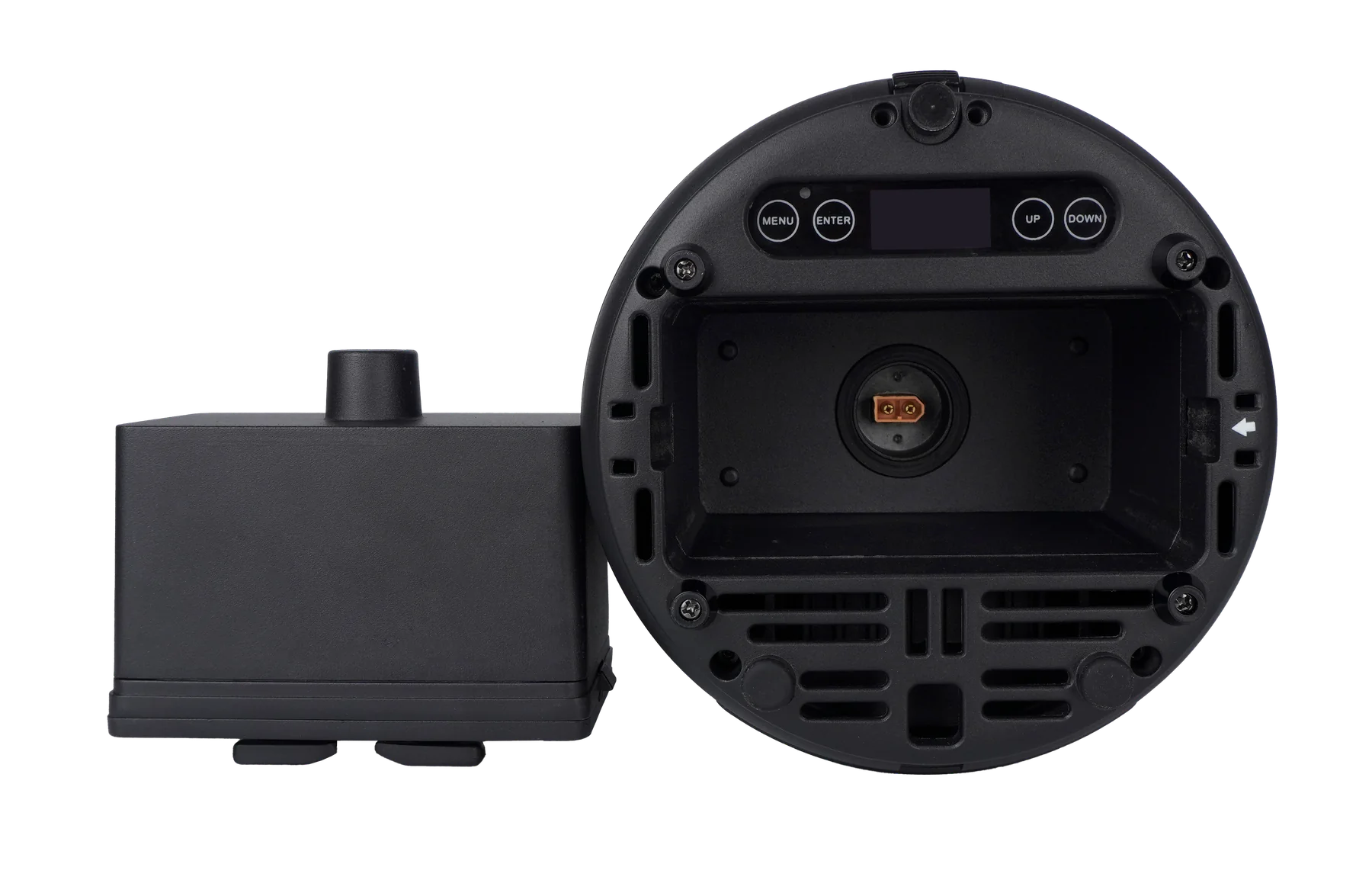
A removable design separates pack charging from fixture preparation. The Aqua P4RX removable-battery uplight uses a latch-secured pack that charges separately and is replaced between runs after switch-off. The detailed removable-battery fleet workflow covers pack identification, seating inspection, and records.
Four Charging Options Professional Buyers Should Compare
The charging method changes how equipment moves through a warehouse. Compare the repeated action, compatible equipment, electrical plan, inspection points, and failure response for every option.
Single-Fixture Power Adapter Charging
An adapter connects approved power to one complete fixture. It suits samples, small inventories, dispersed charging positions, or models without a shared case or base. Fleets must manage every lead, adapter, plug, outlet, and status indication.
Specify the adapter model, electrical input and output, destination plug, connector, status indication, ventilation, moisture limits, and required fixture state. Do not substitute a visually similar adapter.
Multi-Light Charging Flight Case
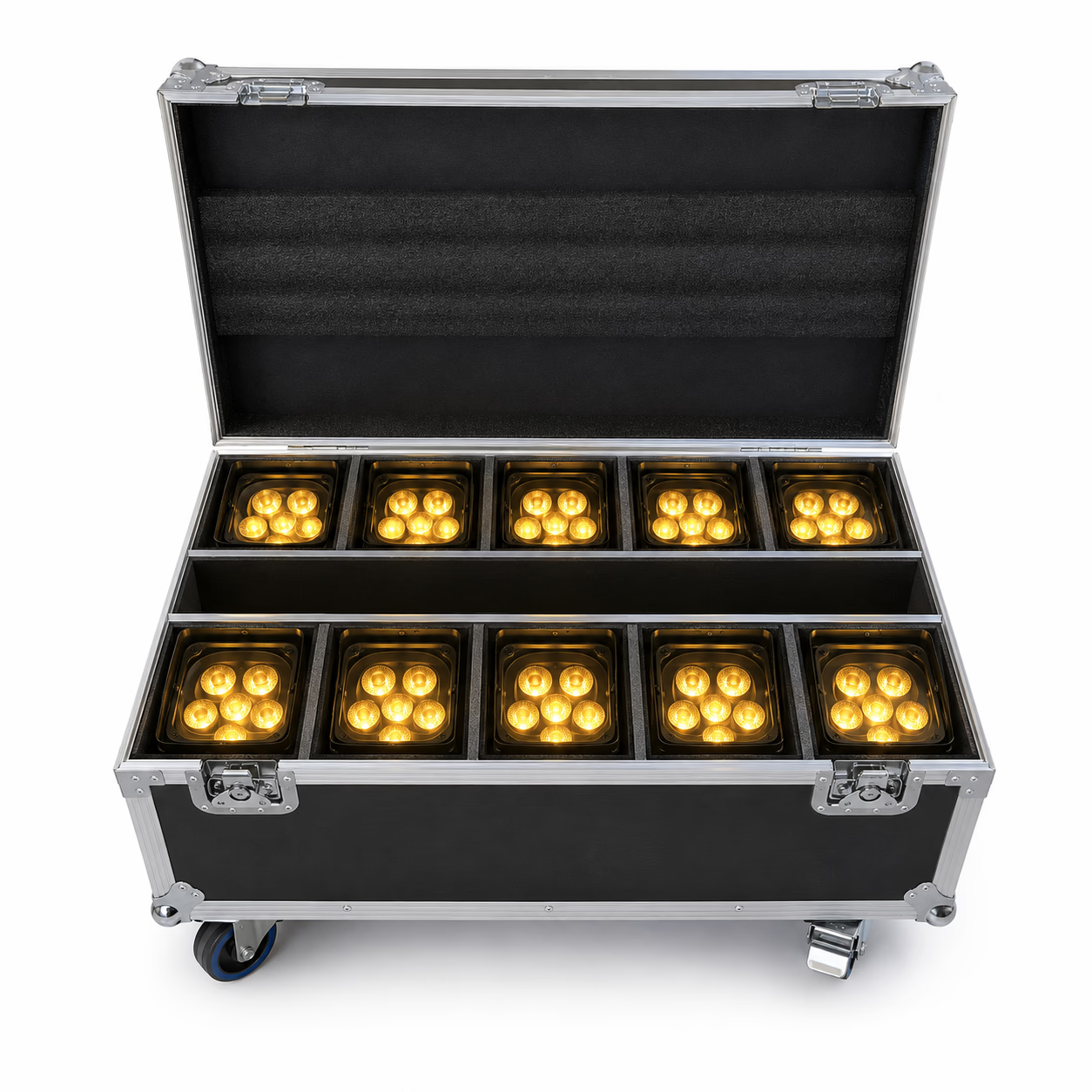
A charging flight case combines transport, storage, and multiple fixture positions. The LumiUp Battery PAR Charging Flight Case product record lists 6-, 8-, and 10-light configurations. These are available configurations, not universal compatibility or permission for simultaneous use.
Identify the fixture revision, case configuration, supply, plug, circuit requirement, ventilation, status method, and in-case charging permission. Treat the case as a configured electrical system.
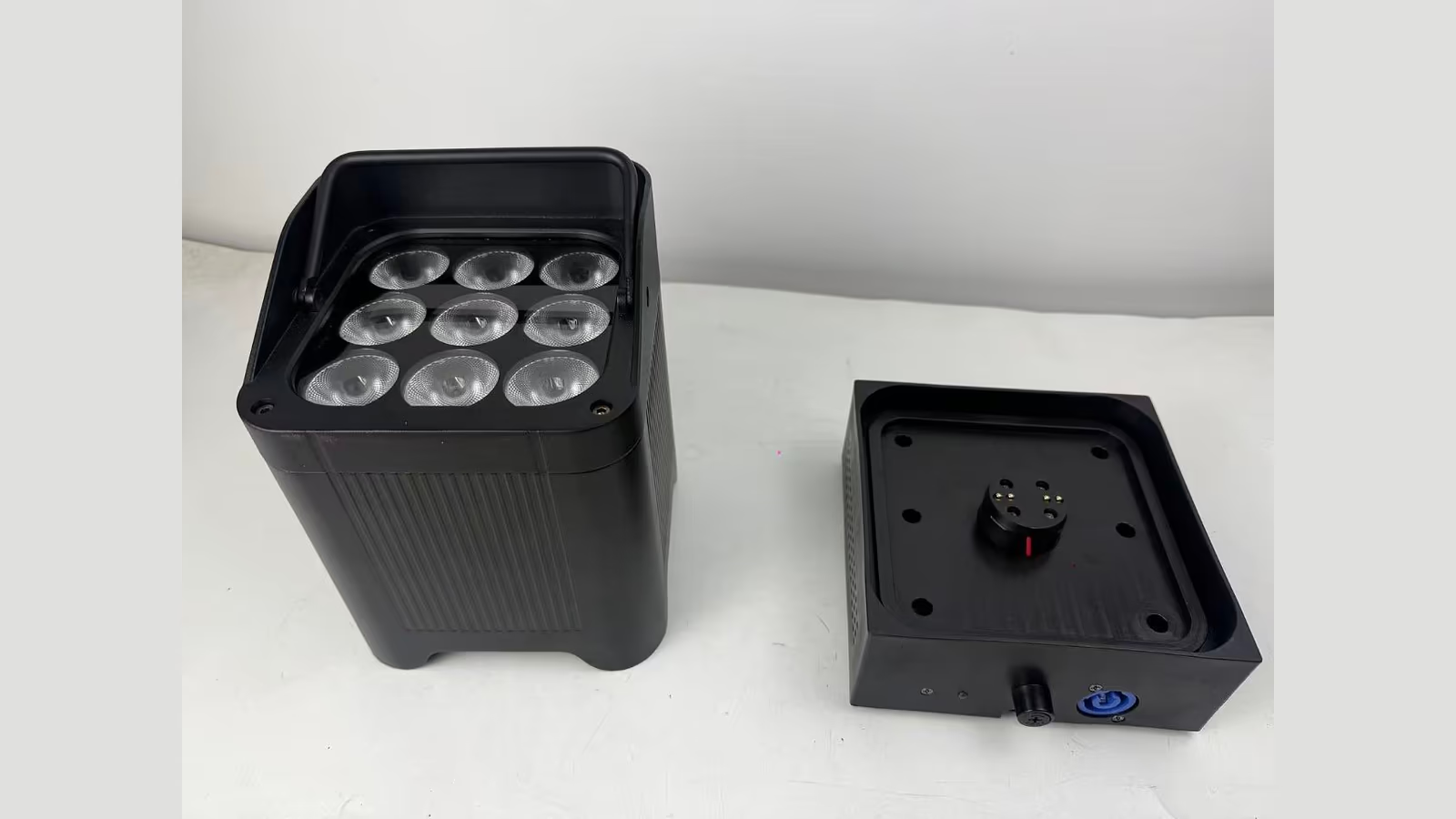
Powered Drop-In Contact Charging Base

A powered drop-in contact base provides a repeatable action: place the compatible light so aligned contacts meet, then lift it out after the approved procedure. The base still connects to AC power.
The Aqua P9X uses the dedicated LU-AQP9X-BASE powered drop-in contact charging base. Its product record identifies one compatible fixture position, a 100–240V AC input, and fuse protection. It does not publish a charging time, efficiency, or base IP rating. See how the Aqua P9X contact charging base works for the model-specific interface.
This is a physical contact system. It is not Qi or inductive charging, and the base is not cable-free because its AC input must be powered.
Separately Charged Removable Battery Pack
With a removable-pack system, the pack moves to an approved charger while the fixture is inspected or prepared with another ready pack. This can protect availability when the fleet has enough compatible packs and charging positions.
Buyers also need pack and charger identifiers, approved exchange steps, inspection criteria, storage rules, service stock, and quarantine. Similar housings do not prove cross-model interchangeability.
Charging Method Procurement Comparison
Swipe horizontally to compare all four charging methods.
| Criterion | Single adapter | Charging flight case | Powered drop-in contact base | Removable pack |
|---|---|---|---|---|
| What connects to power | Approved model-specific adapter | Configured case input | Base connects to AC | Approved pack charger |
| Item placed at charger | Complete fixture | Compatible fixtures in assigned slots | Compatible fixture on base | Removed pack |
| Repeated operator action | Insert and remove a lead | Return each fixture to its slot | Place and lift the fixture | Power off, identify, remove, charge and reinstall |
| Documented LumiUp example | Verify by fixture | LU-FC-CHG in 6-, 8-, or 10-light configurations | Aqua P9X with LU-AQP9X-BASE | Aqua P4RX |
| Charging positions | One per approved adapter | Specify exact ordered configuration | One per dedicated base | Set by approved charger and pack stock |
| Main workflow advantage | Simple individual setup | Consolidated transport, storage and charging | Repeatable place-and-charge connection | Separates pack charging from fixture preparation |
| Main trade-off | Cable and adapter handling | Compatibility, ventilation and circuit planning | Dedicated bases and contact care | More inventory, traceability and reassembly checks |
Charging time, status behavior, electrical load, environment, and simultaneous-use conditions remain model-specific fields. Put them in the quotation instead of filling the comparison with generic values.
Rental-Fleet Turnaround and Spare Strategy
Start with the batch that returns together, not total fleet size. Map event return to the next dispatch:
- Record the return time and identify every fixture, pack, base, adapter, and case.
- Inspect for damage, moisture, contamination, abnormal heat, or charging-interface problems.
- Separate equipment into ready, charging, service, and quarantine states.
- Assign verified charging positions without exceeding the documented electrical configuration.
- Perform the required readiness check before the load-out deadline.
For back-to-back events, calculate the gap from measured runtime and verified charging capacity. Spare fixtures, compatible spare packs, and extra charging positions protect against different constraints, so there is no responsible default percentage.
Use the battery uplight fleet-turnaround calculation to convert the return quantity, approved simultaneous charging positions and verified batch time into a conservative dispatch commitment.
Use the existing guide to connect runtime testing and battery care with the charging plan. Record the actual scene, event window, battery condition, charging time under the approved configuration, number of simultaneous positions, and consequence of a missed dispatch.
Parameters to Confirm Before Purchase
Ask the supplier to state each field against the exact model, SKU, hardware revision, and destination:
- Battery chemistry, nominal voltage, ampere-hour capacity, and watt-hour rating
- Integrated or removable structure and the authorized replacement procedure
- Approved adapter, base, case, pack charger, and included versus optional items
- Input voltage, frequency, current or power, plug, fuse or protection, and circuit plan
- Charging time with test conditions and permitted simultaneous charging positions
- Status indication, full-charge behavior, ventilation, spacing, temperature, moisture, and cleaning limits
- Compatibility matrix across fixture, charger, base, pack, case, and hardware revision
- Replacement availability, lead time, version control, and warranty treatment
The answer should form one system specification. A fixture quotation without charging accessories and documents is incomplete.
Safety, Transport, and Maintenance Documents
Request the operating manual, charging instructions, battery identity, charger or base documentation, safety data sheet, applicable UN 38.3 test summary, and shipment-specific packing and transport records.
The IATA 2026 Battery Guidance Document distinguishes batteries shipped alone, packed with equipment, and contained in equipment, and explains test-summary availability. The UNECE Manual of Tests and Criteria resources provide the current Revision 8 and Amendment 1 materials behind subsection 38.3. PHMSA lithium-battery guidance explains the United States transport context.
These sources do not prove a LumiUp model holds a named certification or that one instruction fits every shipment. Battery configuration, watt-hour rating, condition, installed or separate status, route, mode, carrier, and destination all affect the review. Use a qualified freight specialist for the actual consignment.
Charging Environment and Abnormal Conditions
Before charging, follow the exact manual and inspect the approved charger, cable, connector or contacts. The interface should be dry and clean, with the required ventilation and spacing. Remove equipment from normal service after abnormal heat, swelling, odor, smoke, persistent charge faults, damaged wiring, contamination, corrosion, or moisture at the charging interface. Do not open a sealed pack, bypass protection, or improvise a charger.
RFQ Checklist for Charging Options
Send the supplier:
- Fixture quantity, exact models, destination country, and required plug
- Typical return batch, charging location, available circuits, and next-dispatch window
- Preferred adapter, flight-case, contact-base, or removable-pack workflow
- Transport, storage, case, spare-fixture, spare-pack, and service-parts requirements
- A request for the compatibility matrix, manuals, battery data, charging evidence, and shipment documents
- A sample test plan covering receipt, charging, event operation, return, recharge, and readiness for the next dispatch
Frequently Asked Questions
Are battery-operated uplights rechargeable?
Professional battery-operated uplights are often rechargeable, but the terms describe different attributes. Battery-operated describes power during use; rechargeable describes whether the battery can receive energy again. Verify the exact model and approved charging system.
What is the difference between battery-operated and rechargeable uplights?
Battery-operated means the fixture can run from a battery. Rechargeable means its battery is designed to be replenished through approved equipment. A product can be both, while the charging hardware may be an adapter, case, base, or separate pack charger.
Do rechargeable uplights use a charger for each fixture?
Not always. Some use one adapter per fixture, some return to positions in a charging flight case, some use a dedicated powered base, and some have removable packs charged separately. The approved method is model-specific.
Can battery uplights charge inside a flight case?
Only when the exact fixture and case configuration expressly permit it. Verify compatibility, electrical input, simultaneous positions, ventilation, status indication, and operating instructions for the ordered system.
Is the Aqua P9X charging base wireless or inductive?
No. It is a powered drop-in contact base that transfers energy through aligned electrical contacts. It is not Qi or inductive charging, and the base requires an AC connection.
Can a removable battery pack charge separately from the uplight?
Yes, when the model is designed for that workflow. The Aqua P4RX is a documented example with a latch-secured pack for separate charging. Use its approved equipment and exchange procedure.
How many battery uplights can charge at the same time?
The number depends on verified charging positions, fixture compatibility, circuit capacity, simultaneous-use conditions, and manufacturer instructions. Do not use the case slot count alone as an electrical capacity claim.
What charging documents should an importer request?
Request the operating and charging instructions, charger identity, battery chemistry and watt-hour data, safety data sheet, applicable UN 38.3 test summary, compatibility matrix, and documents required for the actual shipment.
Compare the Complete Charging System Before Unit Prices
Choose a charging workflow that fits return batches, electrical conditions, dispatch deadlines, service, and transport. Send LumiUp the fixture quantity, models, charging location, destination power, case requirements, and preferred spare strategy for a model-specific review.