
Quick Answer
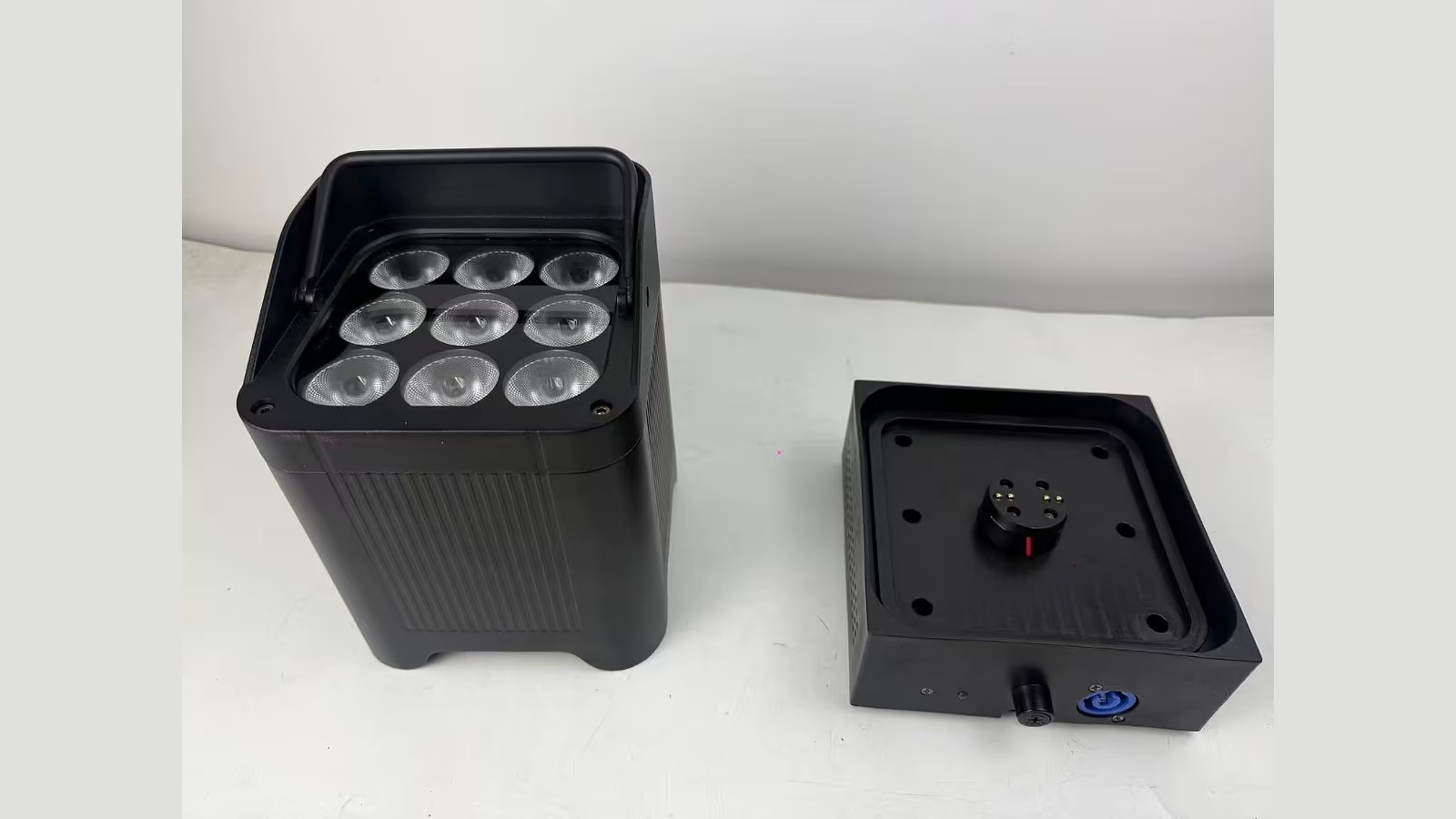
Yes. For the LumiUp Aqua P9X, LumiUp developed a dedicated powered charging base. Connect power to the base, align the fixture, and place it on top. The fixture and base meet at their charging contacts, so power can transfer without plugging a charging cable into the fixture each time. “Wireless-rechargeable” here does not mean Qi, inductive, or contactless charging. The base still connects to AC power; the cable-free part is the connection at each fixture.
What Does “Wireless-Rechargeable” Mean for an LED Uplight?
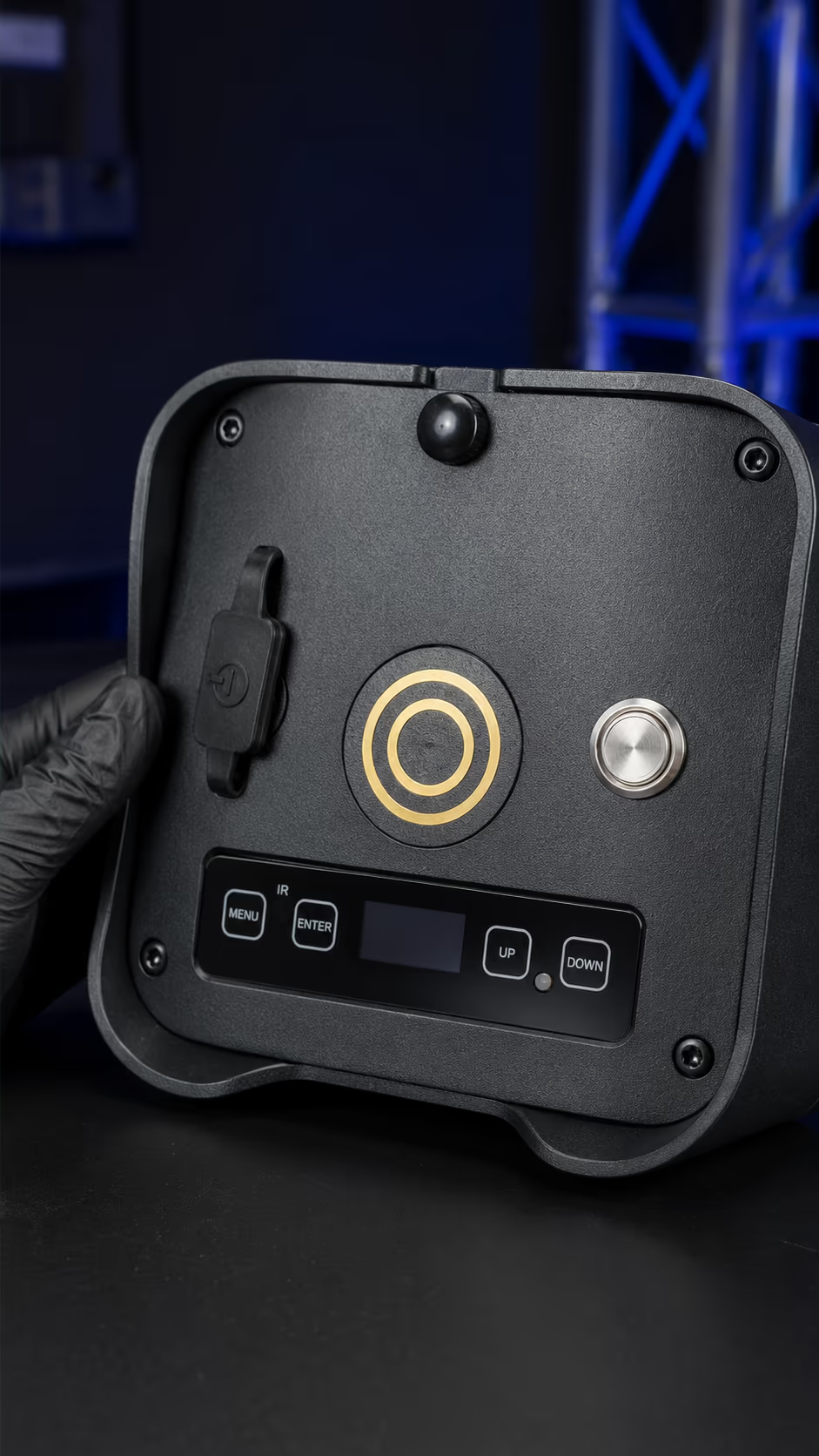
“Wireless” can describe several different parts of a professional lighting system. Keeping those meanings separate helps buyers compare fixtures accurately.
- Battery-powered operation: The fixture can run during an event without a mains cable attached.
- Wireless lighting control: Control data reaches the fixture without a wired DMX line. This concerns signals, not battery charging.
- Drop-in contact charging: The operator places the fixture on a powered base instead of plugging a charging lead directly into the fixture.
For the LumiUp Aqua P9X, “wireless rechargeable battery uplights” describes the third workflow when the fixture is used with its dedicated base. The system transfers electricity through physical contacts that align when the light is seated. It is not an over-the-air energy system, and the charging area is not completely cable-free because AC power must reach the base.
That distinction matters in a specification, quotation, or fleet plan. Wireless DMX can simplify control cabling during an event. Battery power can remove fixture power leads during operation. The charging base addresses a different job: returning the fixture to a charging position after use without inserting a lead into the light itself.
How the Aqua P9X Charging Base Works
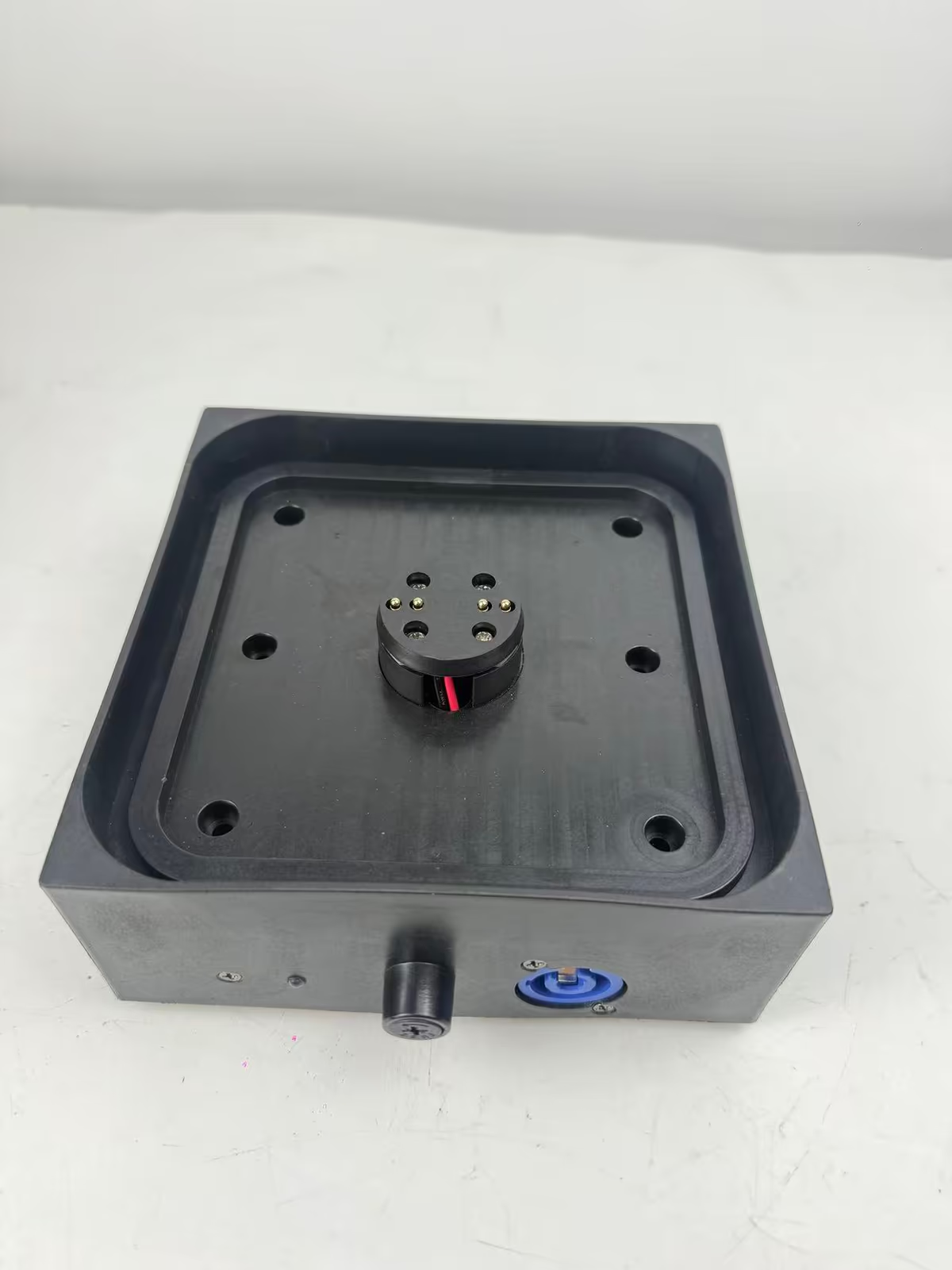
The Aqua P9X drop-in charging base is a dedicated accessory for the LU-AQP9X fixture. Its shaped recess locates one compatible light while the central contact assembly meets the charging interface on the bottom of the fixture. The base has one AC power input, accepts 100–240V AC, and includes fuse protection.
The place-and-charge workflow has four steps:
- Connect power to the charging base. Place the base in the agreed charging area and connect its AC input.
- Align the Aqua P9X with the base. Orient the fixture so its charging interface matches the dock.
- Place the fixture onto the base. Seat it fully in the shaped charging position.
- Let the charging contacts engage. The aligned electrical contacts connect the powered base to the fixture and charging begins.
Charging takes place through aligned electrical contacts, not Qi or inductive transfer. Its practical value is the simple place-and-charge action: set the compatible fixture on its powered base. Crews should keep the contact areas clean and follow the supplied operating instructions.
Why It Matters for Rental Fleets
Charging one uplight is simple. Charging a return batch after an event involves more repeated handling: unload, count, inspect, position, connect, monitor, prepare, and repack. A battery uplight charging base removes one small but recurring action—the need to insert a charging lead into every fixture.
At event load-out, fixtures can return to the warehouse as a clearly identified group. After inspection, a technician can place each Aqua P9X on its assigned base. During next-event preparation, the same technician can lift fixtures from their bases as they move into testing, cleaning, or packing. There is no fixture cable to disconnect at that moment.
The workflow can also make a charging area easier to organize. Individual plug-in leads often need to be routed to the input on each light, then collected or kept with the correct station. Drop-in bases keep the operator action consistent: the base remains powered in its planned position, and the compatible fixture is placed on or removed from it. Power leads still exist, but they terminate at the bases rather than being repeatedly connected to the lights.
For a large fleet, consistency is the main advantage. A documented row, shelf, or bench of bases gives crews a repeatable return position for compatible units. It can reduce loose charging leads around each fixture and make it easier to see which lights are in the charging area. This convenience relates to handling rather than charging speed or battery performance. The main benefit is a simpler, repeatable connection workflow for fleet operations.
Rental managers should still design the complete process around fixture quantity, electrical capacity, inspection, charging status, and the next dispatch time. A dock changes how the fixture connects; it does not replace charge planning or readiness checks.
Use the multi-fixture turnaround calculation to model batch count, non-charging work and a conservative dispatch commitment for the approved Aqua P9X charging configuration.
Drop-In Base vs. Traditional Plug-In Charging
Traditional plug-in charging remains practical for occasional individual charging. A contact charging dock is most useful when the same compatible fixtures repeatedly return to a prepared charging position.
| Item | Traditional Plug-In Charging | Aqua P9X Charging Base |
|---|---|---|
| Operator action | Plug a charging lead into the fixture | Place the fixture on its powered base |
| Fixture connection | Charging cable connected directly | Aligned charging contacts |
| Cable handling | Individual lead at each fixture | Power connected to the base |
| Removal | Disconnect the fixture cable | Lift the fixture from the base |
| Best use | Occasional individual charging | Repeated charging and fleet preparation |
This comparison focuses on the connection and handling workflow.
Where the Charging Base Is Most Useful
The value of cable-free uplight charging at the fixture increases when charging is frequent, repeatable, and handled by several team members.
- Rental warehouses: Give returning Aqua P9X units a consistent place-and-charge position between dispatches.
- Wedding and event lighting companies: Move fixtures from event return to charging, testing, and repacking with fewer direct cable connections at the lights.
- Hotels and permanent venues: Maintain a defined charging area for battery uplights that are redeployed across ballrooms, meeting rooms, or temporary functions.
- Showrooms: Demonstrate the physical charging workflow while keeping the fixture and matching base together.
- Distributors: Show professional buyers exactly what “wireless-rechargeable” means before quoting a fixture-and-base configuration.
- Production companies: Support frequent event turnover with repeatable charging positions for compatible inventory.
A charging base is less important when a business charges only one fixture occasionally or already has a plug-in process that fits its schedule. The purchasing decision should follow the frequency of returns, number of fixtures, available charging space, and warehouse routine—not the word “wireless” by itself.
What Buyers Should Verify in the Quotation
Start with the exact pairing. The fixture is LumiUp Aqua P9X, model LU-AQP9X. The dedicated base is LU-AQP9X-BASE. Do not assume that a similar housing, another Aqua model, or an earlier hardware version uses the same interface without written confirmation for the units being purchased.
Then confirm the required base configuration. The published base is a single-fixture dock with one AC input, 100–240V AC compatibility, and fuse protection. The base is an optional accessory sold separately from the Aqua P9X, and the fixture is sold separately from the base. A quotation should therefore identify the fixture quantity and charging-base quantity as distinct line items.
Review the physical workflow with the people who will use it. Confirm where the powered bases will sit, how operators will align and seat each fixture, how contacts will be inspected, and how a light will move from event return through charging and readiness checks. The benefit is strongest when the charging positions are planned rather than treated as loose accessories.
Finally, confirm the charging environment. The Aqua P9X fixture page publishes an IP65 rating for the fixture, but the charging-base page does not publish an IP rating for the base. Do not transfer the fixture rating to the dock or assume that outdoor operation and outdoor charging have identical requirements. Ask LumiUp to confirm the applicable charging conditions for the intended venue, warehouse, or fleet setup.
Frequently Asked Questions
Can battery-powered LED uplights be wireless-rechargeable?
Yes. The LumiUp Aqua P9X can charge on its dedicated powered base without a charging cable being inserted into the fixture each time. The base itself still requires an AC power connection.
Is the Aqua P9X charging base a Qi or inductive charger?
No. It uses aligned electrical contacts between the Aqua P9X and its powered base. It is not Qi, inductive, or contactless charging.
Do I need to plug a charging cable into the fixture?
Not when using the dedicated charging base. Connect AC power to the base, then place the Aqua P9X on it. This removes the repeated cable connection at the fixture, not the power connection to the charging system.
How does the Aqua P9X connect to the charging base?
The shaped base positions the compatible fixture so the central contacts on the base align with the charging interface on the bottom of the Aqua P9X. Seat the fixture fully so those contacts engage.
Is the charging base included with the Aqua P9X?
No. The Aqua P9X product information identifies the charging dock as an optional accessory sold separately, and the charging-base page states that the fixture is sold separately.
Is the charging base suitable for outdoor use?
The published charging-base information does not state an IP rating. The Aqua P9X fixture’s IP65 rating should not be applied to the base. Confirm the required charging environment with LumiUp before planning outdoor or exposed charging.
A Simpler Connection for Repeat Charging
The Aqua P9X charging system answers a practical buyer question with a precise solution. The fixture can operate as a battery-powered uplight, while the dedicated powered dock handles charging through aligned contacts. Crews place the light on its base instead of plugging a cable into the fixture after every use.
For rental companies, distributors, event-production teams, hotels, and venues, that place-and-charge workflow can make repeated charging positions easier to organize without overstating what the technology does. Explore the LumiUp Aqua P9X and its dedicated contact charging base. Teams comparing serviceable fleet workflows can also read about removable-battery uplights for rental fleets. To review quantities, charging positions, and the intended environment, contact the LumiUp team.